A Modest Solution: Bring Your Own Balde

By Sophie Fabrigar and Yohann Udtohan || Illustration by Joxyne Gravoso

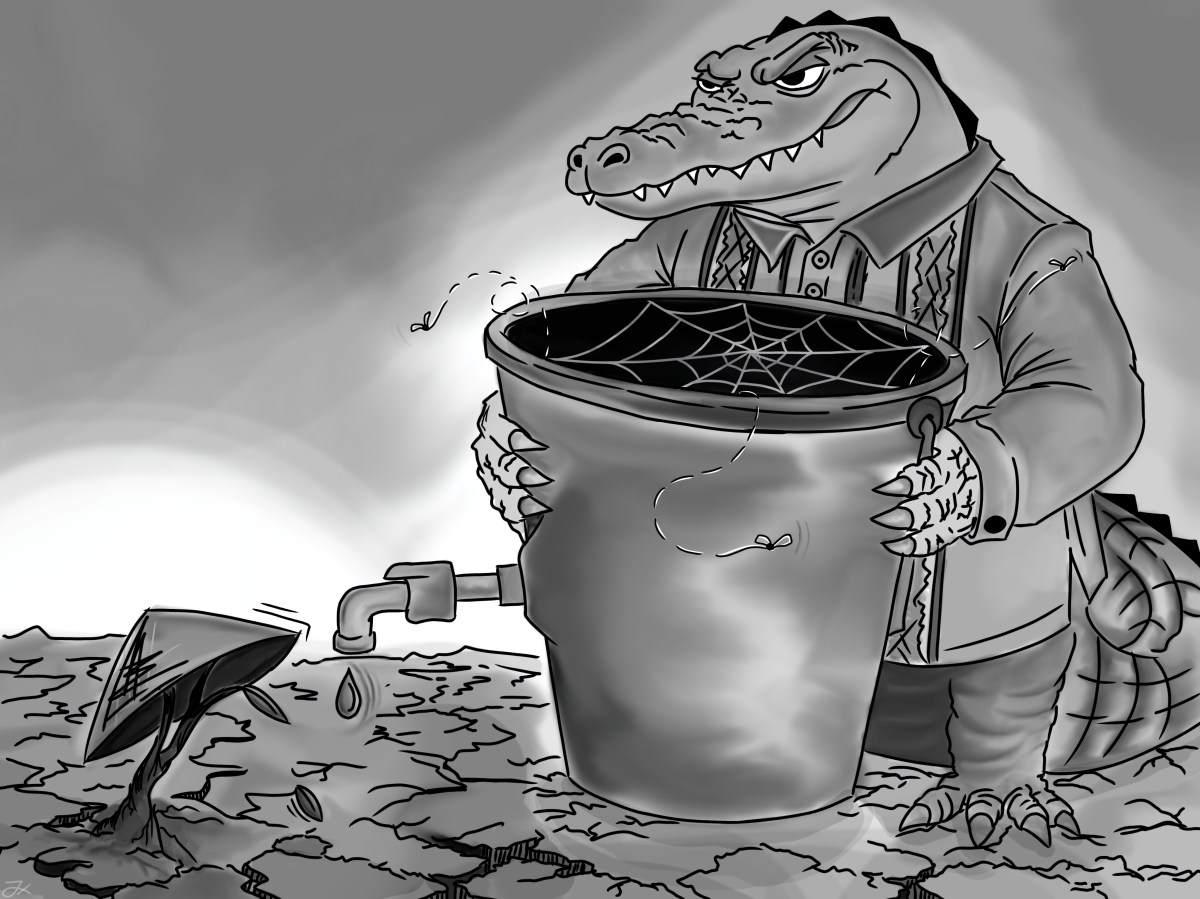
It is a melancholic tragedy to live in a country where rain is both a threat and a blessing, yet neither its arrival nor its absence seems to find the people prepared. When the drought sets in, they wait at taps that give them nothing; when the rains arrive, the water comes in such excess that it swallows the streets they call home. We had nearly surrendered hope of a remedy until President Ferdinand Marcos Jr., in his wisdom, offered one: prepare buckets to collect rainwater as the country braces for a possible Super El Niño. At last, a national solution that fits in every household. It is inexpensive, portable, and requires no billion-peso budget. It fits, quite literally, in a balde.

When some ungrateful citizens questioned this ingenious proposal, Malacañang’s press office had an answer of equally remarkable simplicity: they ought to buy themselves “buckets and buckets of brains.” We confess we found this reassuring. At last, someone in the government had identified a shortage more fundamental than water, and one which, unlike water, could apparently be remedied by a trip to the store. Indeed, the market seems to have understood the President’s vision before the rest of us did, with reports of increased demand for buckets and drums in Marikina following his advice. If only every government initiative enjoyed such immediate public participation.


We therefore propose that the balde be adopted as the official instrument of national development. If households must provide their own containers to catch whatever water the heavens permit, they may as well provide their own solutions to whatever problems the government cannot prevent. Consider flood control, on which so many billions have been spent, yet which has not spared many communities from knee-deep water. The sensible response is to equip every family with a bucket and instruct them to bail their homes and streets dry, one scoop at a time.

When the power grid stages its customary blackout, which it does with a punctuality our public transportation might envy, Filipinos need only procure a balde and stock it with fireflies, whose modest illumination may prove more dependable than the nation’s electrical infrastructure. Commuters stuck in the long line of morning traffic may carry one balde to sit on, and though fares will not fall, they will enjoy the dignity of having brought their own seats. As for Filipinos who have grown weary of expecting competence from their elected officials, a balde of patience is sold in the same aisle as the brains.


Indeed, the possibilities are endless. If public hospitals run short of beds, patients may stack four baldes to fashion a makeshift cot, drape a curtain over the arrangement for privacy, and rest comfortably in the knowledge that even hospitalization is an exercise in resourcefulness. If classrooms grow crowded, children can turn their baldes upside down and use them as chairs, learning from an early age that education is not something a government provides but something a child must improvise. Should the country experience another power shortage, every household may be instructed to catch lightning in a balde. The Department of Energy need only distribute lids to prevent the electricity from escaping. And as temperatures climb to unbearable heights, citizens may be instructed to wear their baldes as hats. Thus, the balde shall serve not only a practical purpose but also as a bold fashion statement, ushering in a new era of climate-conscious couture in which the size of one’s headwear reflects the severity of one’s suffering.

Some may object that buckets cannot build reservoirs, repair water systems, prevent floods, or guarantee a reliable supply of clean water. These critics, we fear, misunderstand the elegance of the proposal. Such infrastructure requires planning, public funds, competent administration, and accountability—burdensome matters that can be avoided when responsibility is transferred to individual households. Why should the government undertake the expensive business of preventing a crisis when the people can be instructed to prepare for its consequences? Why repair a system when citizens can purchase containers to compensate for its failures? And why demand answers from public officials when the press office has already prescribed the proper remedy for our shortage of brains?

Perhaps, in time, the balde will become the defining symbol of the Filipino people. Every household shall own one, every child shall learn to carry one, and every citizen shall be reminded that survival is a personal responsibility, even when the causes of suffering are public. We shall no longer need grand promises or expensive projects when a simple container can be presented as proof that something has been done.

And should the day come when Filipinos finally ask why they must keep catching the water while those entrusted with governing the country keep passing off buckets as solutions, we are confident that another answer will be ready. Perhaps we shall be told to bring larger buckets. Perhaps we shall be advised to buy more brains. Until then, let every household prepare its balde—for the drought, for the floods, for the next broken promise, and for every failure that might otherwise have demanded an explanation.

After all, the greatest achievement of a government is surely not to keep its people from drowning, thirsting, or going hungry, but to teach them how to endure each condition with a balde in hand. And if the nation should ever run out of water, at least we shall have something left to show for it: a country full of baldes, and a government that can finally claim to have filled them with something.
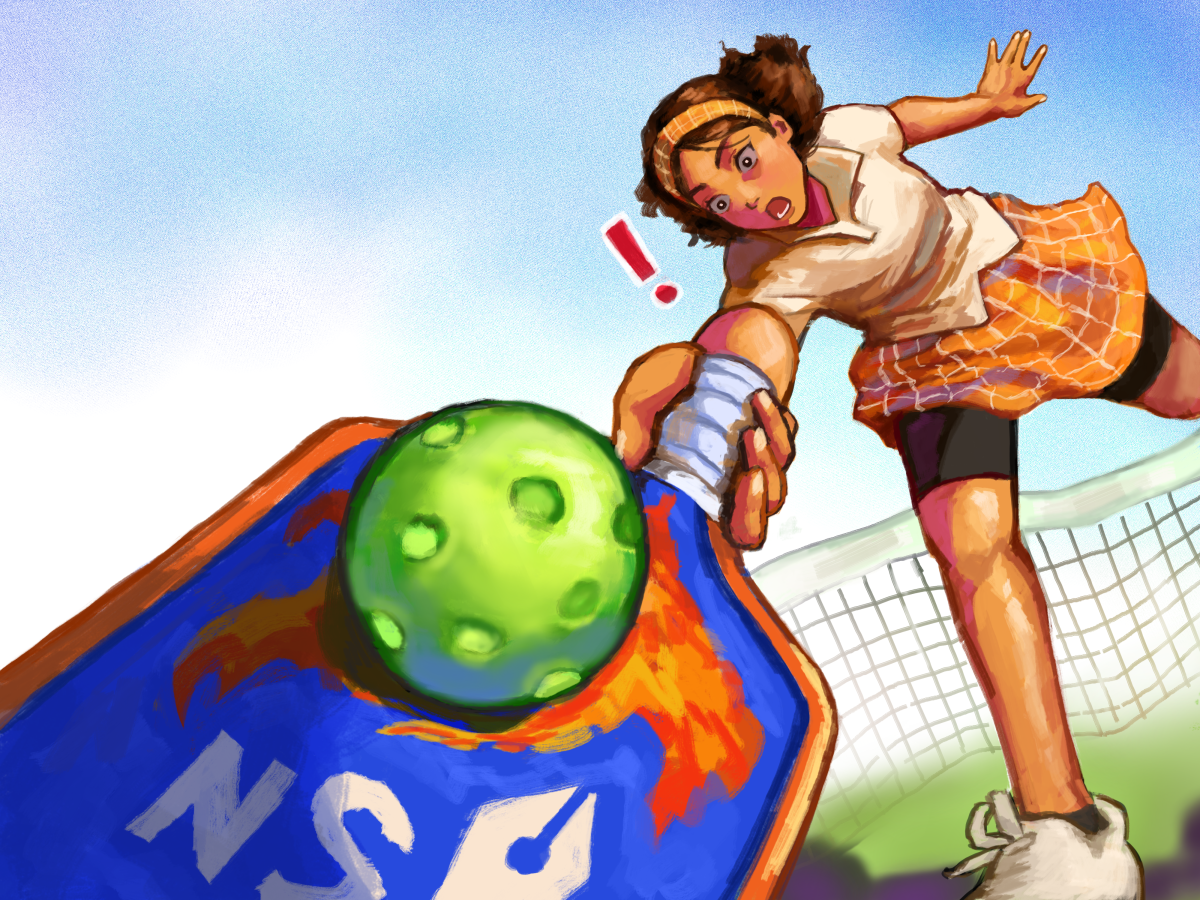
In a Pickle: A Guide to Larping Pickleball

By Nash Palanca || Illustration by Aiyanna Alaon

Pickleball has been having quite the moment. 

What was once an oddly named sport you might have only heard about in passing now seems to be everywhere, from newly opened courts to weekend games with friends. And while pickleball requires little more than a paddle, a plastic ball with a suspicious number of holes, and the whacking skills of an amateur, simply knowing how to swing the paddle won’t get you through every conversation. Once you start playing, you’ll quickly discover that pickleball comes with a language of its own.

To ensure you’re never in a pickle—pun fully intended—when someone asks you to prove your pickleball expertise, here are some essential terms and lingo that you need to pick .

Larping Pickleball 101

  1. The Mysterious Third Number

When you’re playing doubles and ask for the score, the scorer might reply with “1–0–2,” leaving you wondering: one point to my team, zero to the other, and… two to whom exactly? Now, don’t start looking around for a third team, because that third number isn’t another team’s score—it indicates which server is serving, while the first two refer to the serving and receiving teams’ scores. 

So when someone calls out three numbers, there’s no need to look around for another opponent. Just remember this format: the serving team’s score, the receiving team’s score, and the server number. 

  1. Whacking the Paddle

Pickleball is not just about swinging a paddle and hoping that the ball magically lands on the opponent’s side of the net. There are actually several terms associated with the ways players make contact with the ball. 

Have you ever hit the ball before it bounced? That’s called a volley. If the ball bounces before you hit it, congratulations—you’ve just performed a groundstroke. From there, things get a little bit more interesting. Ever hit the ball so hard that it got sent to the opponent’s backcourt? Well, that’s a drive. Prefer to gently tap the ball and make it land in the opponent’s kitchen? That’s a dink. Feeling a little ambitious? Launch the ball over your opponent’s head for a lob, or unleash a powerful overhead strike with a smash.

While actually performing these shots may seem a little intimidating, casually throwing around these terms might be enough to overwhelm your opponents. Who knows? With your newfound vocabulary, they might just hand you your first-ever pickleball win for free.

  1. Hell’s Kitchen

Of all the things pickleball could have named its non-volley zone, it chose the kitchen. A curious choice, considering it has nothing to do with cooking. The kitchen, officially called the non-volley zone, is a seven-foot area extending from the net on each side of the court and marked by a line. Players can step into this zone to hit a ball after it bounces, but they cannot volley the ball while standing inside it. In other words, you may enter the kitchen; you simply have to let the ball bounce before you serve your next shot. 

Better remember that! Trust me, nothing is more frustrating than landing a perfect hit, only to realize you’re standing inside the kitchen. 

  1. Before You Volley

Ever served the ball, watched your opponent return it, and then volleyed it back, only to get called out? You may have just broken the two-bounce rule. Before either team can volley, the ball has to bounce once on each side—first after the serve, then after the return. Break that rule, and the rally is over. 

Lose the rally while your team is serving, and you get a side-out. No, not “outside”—side-out. I know, very creative. Pickleball really does have a way with names. Anyway, a side-out occurs when the serving team loses the rally, causing the serve to pass to the opposing team. And you’ll want to hold on to that serve, because under traditional side-out scoring, a team can only score while serving. Lose it, and the other team gets their turn. 

  1. The Nasty Nelson

As amusing as it sounds, you do not want to get called for a Nasty Nelson. Despite what the name suggests, the term “Nasty Nelson” has nothing to do with your friend named Nelson being, well, nasty. Instead, it refers to a play in which the server deliberately directs the serve at the non-receiving player, resulting in a fault for the receiving team. It is a wonderfully peculiar name for a wonderfully peculiar situation. 

So, unless Nelson is standing on the other end of the court, leave the poor guy out of it.

Now You Know Ball

While all these terms may seem like tempting tools to show off your newfound pickleball vocabulary, the ultimate way to larp pickleball is by stepping on the court and having fun. You might stumble into the kitchen. You might send a lob somewhere it absolutely should not go. You might even become the unfortunate recipient of a Nasty Nelson. But who knows? You might just discover a genuine love for the game and, before long, become a certified pickleballer instead of just pretending to be one.

From the Soil to the Sky

By Gabrielle Pundavela || Illustration by Jen Abasola

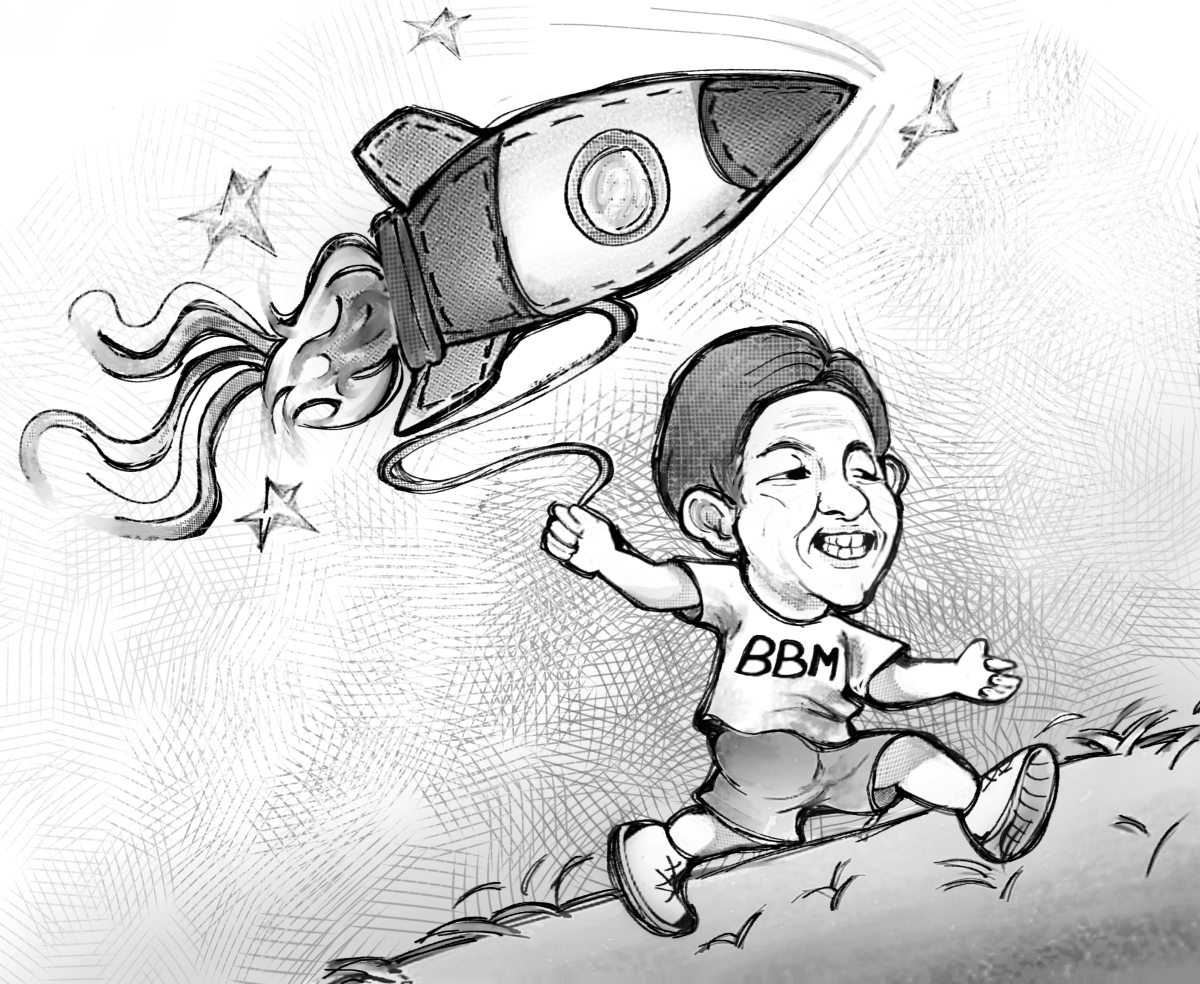
How far can a nation reach for the stars when the ground beneath it remains unstable?

During his fifth State of the Nation Address (SONA), President Ferdinand “Bongbong” Marcos Jr. declared, “Yes, we are going to launch a rocket to space,” announcing a planned 2027 test launch in Cagayan. It was a thrilling promise, one that evoked a country on the threshold of a milestone: joining the ranks of nations capable of launching into space from their own soil. For a country that has long relied on foreign launch sites to put its satellites into orbit, the promise was enormous. 

There is, however, a small technicality: the rocket is not actually going to space.

The initial flight of the liquid-fueled rocket is expected to reach an altitude of at least five kilometers. At that height, the rocket would still be in the troposphere, not even outflying a commercial airliner. Space, by international standards or the Kármán line, begins at 100 kilometers. The announcement is therefore misleading if “space” is to be taken in its technical sense. Nor is the announced flight an orbital launch. Reaching orbit requires not only altitude but also sufficient horizontal velocity to keep a spacecraft circling Earth. The 2027 test in Lal-lo, Cagayan, is therefore a preliminary step toward developing launch capability, not the achievement of placing a spacecraft in orbit.

That may seem minor, but it matters. It matters because the project is being presented to a public whose understanding of “space technology” can easily be reduced to rockets, astronauts, and distant frontiers, when its real value lies in what happens much closer to Earth. Though a test flight need not reach space to be scientifically valuable, if the public is invited to celebrate a milestone, it deserves to know precisely what that milestone entails.

More importantly, we must look beyond how high the rocket flies and ask what its scientific payload is expected to deliver. 

The mission is expected to carry scientific instruments weighing approximately two kilograms. Filipino personnel involved are currently undergoing training in South Korea through the Philippine Space Agency’s SIKLAB: Building Industrial Space Launch Systems Project, in partnership with South Korean space-mobility company Perigee Aerospace, Inc. These are meaningful steps toward developing domestic expertise. Yet the value of the experiment depends on what the instruments can measure, what the mission can demonstrate, and how the resulting data will be used.

The payload is expected to measure and record signals from cellular communication infrastructure on the ground, potentially contributing to research on signal propagation and helping identify areas with poor cellular coverage. 

But what good is identifying a dead zone if the people living in it cannot afford a phone, pay for mobile data, or even rely on a steady supply of electricity? A rocket may map the limits of cellular coverage, but it cannot address the economic barriers that keep people disconnected in the first place. The data may tell telecommunications providers where to build, but it cannot guarantee that they will—or that the services they offer will be within reach of the communities that need them. We must not confuse making the invisible visible with making the inaccessible accessible.

And if the final result of all that sophisticated technology is simply another colorful map showing Filipinos exactly where they already know their phones have no signal, then we have succeeded at measuring a problem without necessarily solving it. Scientific data becomes truly useful only when institutions have the capacity—and the political will—to act on it. 

The proposed Philippine spaceport carries a price tag of ₱17 billion. Before committing to an investment of that scale, we should ask ourselves: In a country that still argues over misused public funds, who is to say that such a large investment will not meet the same fate? 

The test site in Lal-lo, Cagayan offers a potential safety advantage, as directing the rocket’s trajectory toward the Pacific Ocean could allow falling debris to land in open waters rather than populated areas.

But open water does not mean empty water. 

If the Philippines proceeds with plans to establish its own spaceport, temporary maritime exclusion zones will be required to protect vessels from potential hazards, restricting access to waters that municipal fisherfolk depend on for their livelihoods. For communities whose daily catch determines their income, even temporary restrictions could mean lost fishing hours and reduced earnings.

This would force our municipal fisherfolk to steer their boats back toward shallow municipal waters, which are within 15 kilometers of the shoreline. Additional restrictions on fishing grounds, if imposed without adequate consultation or mitigation, could further constrain the options available to these communities. A project cannot claim to serve the national interest while leaving the people who bear its costs out of the conversation.

A spaceport may carry the promise of reaching new frontiers, but that promise rings hollow if the communities below must surrender their livelihoods to make it possible. We cannot call it progress if only a few ascend while the rest are left behind.

Yes, it is true that having our own spaceport could benefit the Philippines. But not now—not yet, for a rocket is only as steady as the ground it leaves. If we wish to stand alongside spacefaring nations, we must build our foundations strong in the soil, so that when we reach for the stars, we do not falter.

Students vie for spots on the PSHS-EVC Varsity Team

By Claire Orejola || Photos by Ponz Peñeda and Tom Ortega

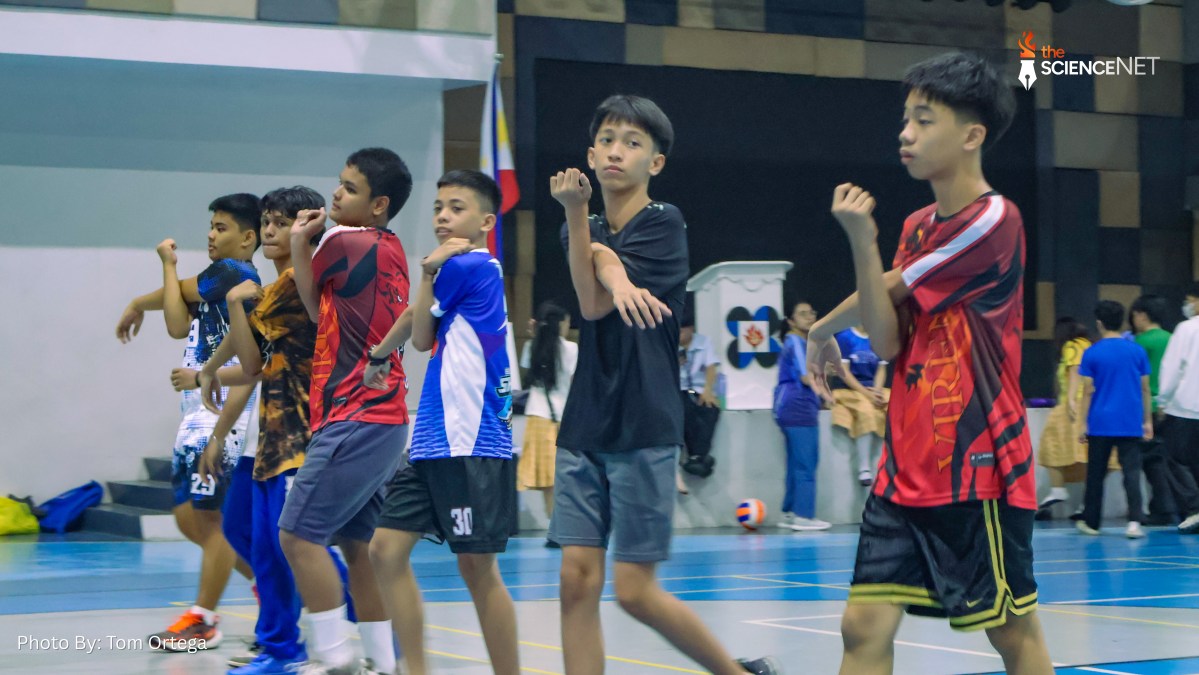
Student basketball players from Grades 7 to 12 participated in a series of training sessions on September 29 and 30 at the PSHS-EVC Gymnasium as Erudites Basketball Team Captain Mike Lin and Coach Neil Rabino assessed their potential, skill levels, and dedication to the team.

“[We’ll be conducting] a system of training sessions twice every week. The summation of all the training is like a tryout in itself, as Sir Neil and I will be the main people to assess who makes the roster or not,” Lin explained. 

On the first day of training, players went through several drills, including a 2-on-1 exercise where two offensive players worked together to get past one defender and score, a ball race that required two players to mirror each other’s movements before racing for the ball, and a movement drill that involved forward, lateral, and backpedal mobility.

“The 2-on-1 helps me see how far their decision-making can go when presented with an advantage, while the ball race helped me identify which players were quick on their feet and knew how to score 1-on-1 with momentum,” Lin explained.

The second training session featured the “chaser,” a drill where two defenders recover to prevent an offensive player from scoring, as well as three-man weave drills, which tested their agility, speed, and court awareness.

“I felt good while training because I was able to play again after a week or two, and I’m glad that I could help the younger generations improve,” returning varsity player Caiden Alava from Grade 9-Rubidium shared.

The final roster is expected to be announced within two to three weeks ahead of the Bethel Cup, a regional interschool sports tournament the varsity team joins annually, although no exact date has been confirmed.

“I hope that regardless if they make the team or not, these players can learn to love the game the way we do,” Lin stated. “My hopes in the near future are that they can run this varsity and do it as well as I did, if not better,” he added.

PSHS-EVC Student Alliance Distributes Free Sorbetes After Quarterly Exams

By Lebron Anthony Morillo || Photos by Danielle Anos

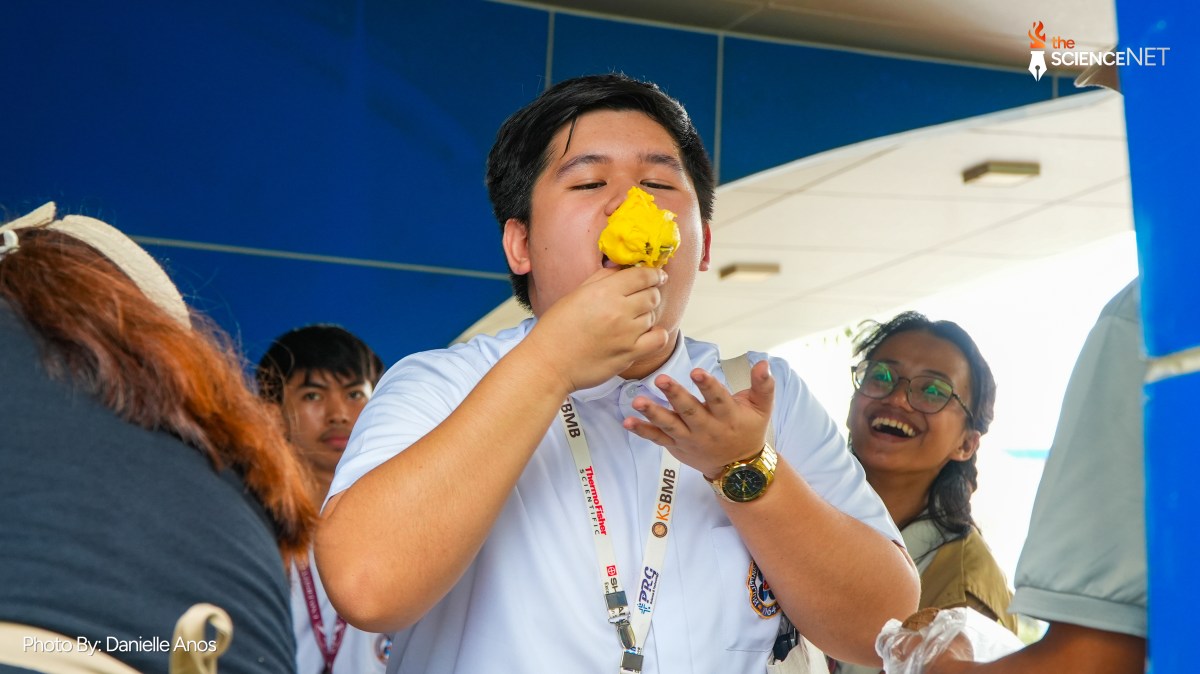
The Philippine Science High School – Eastern Visayas Campus (PSHS-EVC) Student Alliance (SA) served free sorbetes to approximately 500 scholars at the PSHS-EVC Gymnasium on Sept. 22 following the second day of the quarterly examinations through its ₱8,000 “ScoreBestTest” initiative.

The activity marked the SA’s first examination-period program focused on giving students a recreational break. The organization said it also sought to support local sorbetes vendors through the initiative. 

“[We wanted] to invoke our familiar and nostalgic Philippine culture of sorbetes while also giving support to our local vendors,” SA President Kobe Duan said.

According to SA Public Information Officer Ces Suarez, the organization wanted to recognize students’ efforts amid the demands of the examinations.

“With every Isko’s time and efforts exhausted by the demands of exams, we wanted to remind them that in the middle of all the stress they’re in, they still deserve to enjoy [the] simplicity found in the sweet taste of sorbetes,” Suarez said.

The treat offered students a respite from the examination period, with Grade 11 scholar Limwell C. Raz Jr. describing the activity as a welcome break after taking a Mathematics examination, emphasizing the initiative’s purpose.

“First of all, it was an agonizing day—Math—and it was also agonizing in a way that it’s very hot today,” Raz said. “The ice cream really helped a lot in cooling down and lowering my blood pressure. I’m very grateful for it,” he added.

As students prepare for their remaining examination subjects, the SA said it hopes the initiative will encourage them to continue doing their best regardless of their results.

“No matter the outcome, it’s never the end of the world for them,” Duan said. “We hope the students leave with a lighter heart and a reminder that they’ve already done their part by trying.”

Peace of the Gods

By Zoe Quibranza || Graphics by Lyka Lagera

Every age has found a new reason to covet the Philippines. 

Our gold financed conquest. Our sugar enriched foreign economies. Our abaca rigged the sails of foreign navies. Today, the country’s mineral wealth is once again at the center of a global race for power. Now, discussions between Manila and Washington are set to finalize formalities for the Philippines to contribute resources to the US-led Pax Silica, a coalition that seeks to build and secure supply chains for Artificial Intelligence (AI) and its needed components for infrastructure. Once again, the Philippines stands poised to assume a familiar role: extracting and processing nickel, copper, and other raw minerals that are to be made technologically viable elsewhere. The technologies of tomorrow may be built from Philippine resources, but their greatest rewards are still likely to be realized beyond our shores. 

The Philippines has remained trapped in the same role: the supplier of tomorrow’s wealth, but seldom its owner. We have become so accustomed to being looted that we now call it investment. 

History gives us reason to believe that there is a need for caution. Behind the illusory jargon that promises high-value job opportunities and foreign investments lie questions worth asking: When will the Philippines become a nation with the self-sufficiency to build and innovate? When will we stop surrendering our own land, labor, and soil only to become a resource pool for other nations to exploit? 

Following the Philippines’ signing into the Pax Silica last April, its role in the initiative has become clearer. Central to the agreement is the proposed development of a 1,619-hectare Economic Security Zone (ESZ) to house a technology and industry complex in New Clark City, envisioned to initiate semiconductor manufacturing, AI infrastructure, and domestic mineral processing facilities. While marketed as a significant leap toward modernization, it leaves the country’s place in the global chain largely unchanged. The Philippines may process more of its own minerals; however, it is obvious that higher-value activities such as advanced chip design and AI model development are still concentrated in countries that already dominate the global technology market. In effect, the Philippines may climb a single rung of the ladder, but someone else will still own the ladder itself. 

Although discussions for the proposed ESZ remain in the pre-development and site assessment stage, certain government authorities have already approved a two-year land rental grace period to the US and prospective investors. Such generous incentives are often justified as necessary to attract foreign investment, yet  they raise a more pressing concern: whose interests are they ultimately designed to serve? An ESZ built primarily to satisfy American supply chain objectives risks becoming, in practice, no different from an extension of the US on Philippine soil–and while land may remain under our flag, its purpose would become increasingly dictated by Washington’s geopolitical interests rather than our nation’s goal of technological self-sufficiency.

AI is often mistakenly viewed as weightless–as though innovation exists only inside algorithms and cloud servers. It does not. Every chatbot, every semiconductor, and every data center rests upon enormous amounts of electricity, water, and minerals to sustain the promise of unmatched innovation. Yet such commodities are far from limitless. As the Philippines commits itself to powering its own technological ambitions and those of other nations, it must also confront the reality that every additional megawatt demanded by AI infrastructure is a megawatt drawn from a grid that already struggles to provide affordable electricity to its own people. 

The contradiction is perhaps most evident in Eastern Visayas, which houses renewable energy plants such as the Tongonan and Malitbog geothermal fields under the Unified Leyte Geothermal Power Plant–among the largest geothermal complexes nationwide. Despite hosting such facilities and contributing clean energy to the national grid, the region continually grapples with persistently high electricity prices. 

It is difficult to accept that a region hosting one of the country’s most important energy resources cannot receive meaningful benefit from it. For the PSHS-EVC community, where students and their families already contend with rising utility costs affecting both learning and way of living, the promise of AI-driven industrialization rings hollow if it exacerbates the problem of extracting local resources without making energy more accessible to the very people who help produce it. 

There is a scarcity of alternatives when presented with a choice between deepening dependence on the US or risking alienation from the very neighbors with whom we share our region. That is hardly a choice at all, but a predicament imposed by powers whose interests have long outweighed our own. For those who have always known comfort and luxury, peace is easy to negotiate when someone else is made to bear its cost. It is clear that the Pax Silica promises a peace sustained by dependence and unequal sacrifice–a peace reserved for the gods who are powerful enough to demand it.

Until There’s No Need to March

By Sophie Fabrigar || Graphics by David Roberts

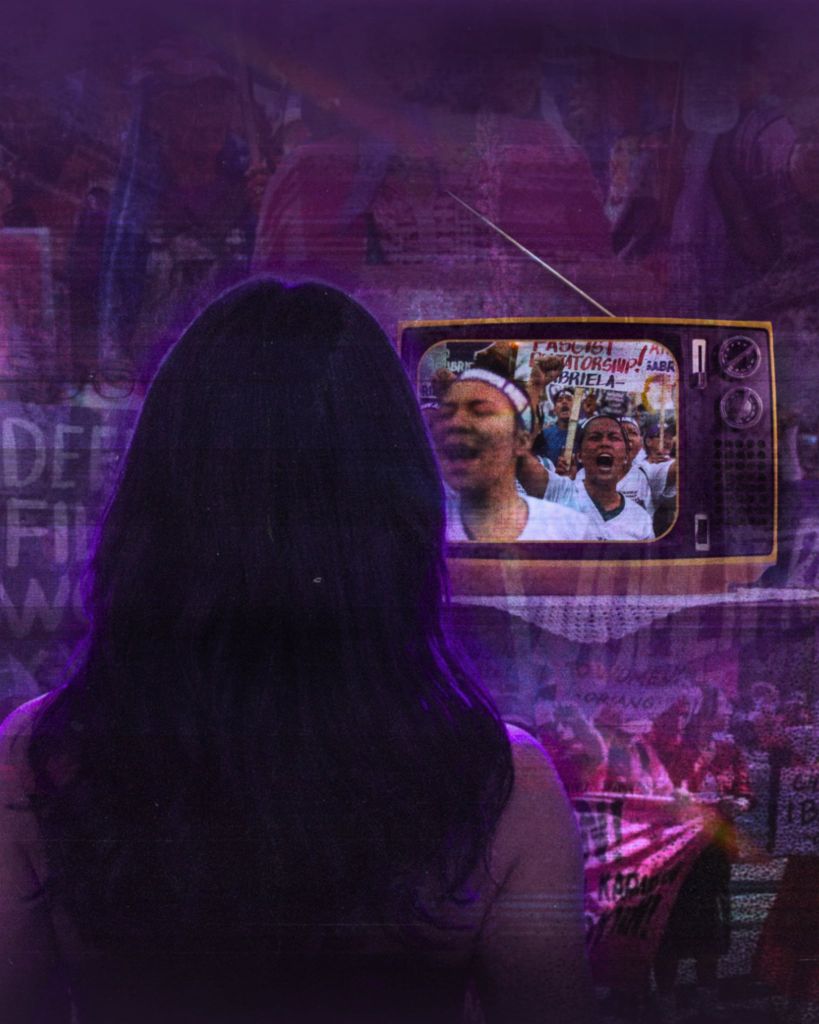
“Every March, we celebrate women.”

This is what we are told, what we post, what we repeat until it begins to sound complete on its own. Timelines fill with tributes and statements, and for a moment, it feels as though recognition is enough. But recognition, no matter how loud, cannot hide what continues to reveal itself in quieter, more telling moments.

It only takes one incident to break that illusion. One remark said too casually in a space that demands seriousness is enough to remind us that the problem was never fully gone. Because beneath all the language of progress, there are still attitudes that remain unchanged. Women are still spoken about as if they are subjects to be discussed rather than individuals to be respected. They are still reduced into examples, turned into passing references, and stripped of dignity without a second thought.

What makes this even more concerning is not just the remark itself, but how natural it seemed to say it. There was no hesitation, no awareness of how inappropriate it was. That kind of ease does not come from nowhere. It comes from a culture that still allows it, one that has normalized these ways of thinking for generations.

This is why Women’s Month exists. It is not only a celebration but a confrontation. It challenges society to confront the contradictions between what it professes to believe and what it actually practices. For all the talks of empowerment, the instances show how quickly and easily the respect can disappear, when it is not understood deeply.

At the same time, this is not just a story of the challenges women face. It is also a story of how they rise above them. Women have never simply accepted unfair treatment. They have questioned it, fought against it, and refused to stay quiet, even though it would have been easier to do so. There was a reason for the progress we see today. People who wanted to be treated and seen as equals fought for it, step by step.

That is why empowerment cannot be limited to what we say during Women’s Month. It is not in captions, slogans, or fancy posts. True empowerment shows itself in how women assert themselves despite obstacles, refuse to accept disrespect as normal, speak up even when it is difficult, and insist that dignity is not something anyone can grant or take away. It is a daily act of strength, courage, and persistence.

Still, the fact that these incidents continue to happen shows that there is more to be done. Progress is not just about having laws or representation. It is about changing the way people think and act, especially in moments where no one is watching or reminding them. Because if respect only appears when it is expected, then it was never truly there in the first place.

This is what Women’s Month should remind us of. Not just how far we have come, but how far we still have to go. It should push people to reflect on their own behavior, not just celebrate others. It should challenge the idea that respect is something that can be performed once a year and forgotten afterward.

Because it should not be that way at all.

Women should not have to wait for March to be respected. They should not rely on reminders, public outrage, or social media movements just to be treated with basic dignity. Respect should not neither be seasonal nor conditional. It should be constant, present in every space and in every moment.

And if we still need to remind people of that, then that is the real problem.

Women’s Month is not just a celebration. It exists because something is still lacking. Until the day comes when respect is given without being asked, without being prompted, and without being questioned, it will remain necessary.

But that day should have already come.

If Love..

By Ces Suarez, Roj Faelnar, Joshua Mendoza, Samuelle Jagonio, Clara Canta, Allysa Capoquian || Graphics by Rei Alinsub

If love were only romantic, many of us would be unloved. When we measure love only by whether we have someone to call ours on February 14, we overlook the many ways we are already held.

The absence of that kind of love can feel—almost accusatory—as if the day itself requires a partner. But love has never been narrow. It lives in places far less dramatic and far more enduring: in the friends who stay, in the hands that raised us, and in the small, daily acts that ask for no spotlight. 

The Love That Sees Beyond The Face 

Friendship, for as long as I have known its name, had people enter and leave my life as if they never cared to stay. With that, I learned to protect myself by keeping certain parts of me hidden, fearing they were too fragile for anyone else to hold. And so, I categorized the people I met into three sections: those who knew my face, those who knew my marrow, and those who knew my truths rotting beneath my ribs. It was a flawed system, but a system nevertheless—one I hope that would guide me and show me the people worthy of sharing my rib with.

Friendship, I have learned, isn’t just easy laughter or hands held only in daylight. It is the quiet ease of resting your heads against one another in total understanding. It is the bravery and the embrace to occupy spaces no one ever seems to settle in. While I have only known shards of my people for a short time, it feels as if I have carried them further and further. With them, I was taught to remain loud, and louder wherever I go, to implore grace within myself, and to live a life not of certainty, but of learning.

For this, I am eternally grateful. I am grateful to have found the people who became the answered prayers whispered in solitude. I am grateful for the way that they hold the weight of my truths without complaint and  for choosing to return to me every day. To them, I give nothing less than a piece of my rib.

The Love That Fit Inside a Paper Bag

I grew up in a small town called Sogod. It was never famous, but those who knew it spoke softly of its beaches and the unhurried rhythm of provincial life. Within that geography of sea breeze and tricycle engines, I loved one place specifically: Mayong’s Bakeshop & Snackhouse. 

Every day at two in the afternoon, a new batch of bread would emerge from the ovens. My family, as if summoned by something sacred, would begin our small pilgrimage for monay, cheese rolls, and shakoy. It was such a simple habit—almost trivial—yet in its repetition lived something steady and profound: care expressed in coconut-filled bread. It was never just bread. It was two o’clock. It was family. It was knowing exactly where I belonged.

Time, of course, has a way of stretching us away from such rituals. I have grown older; the glass display at Mayong’s has yellowed, and the once-familiar scent has grown faint in my memory. 

But sometimes, when I pass a bakery and catch that familiar fragrance of sugar and yeast drifting into the air, I feel something small and bright tug at my heart. I am back on those roads, the afternoon sun above us, the panadero placing three pan de cocos into a paper bag. I remember then that love does not always arrive in bouquets or love letters; sometimes it arrives warm, slightly sweet, and shared without fuss, and inside a paper bag. 

The First Form of Love We Meet

Before infatuation, before the trembling thrill of crushes, there was a love that paused its own exhaustion to sit beside me and explain equations I was too frustrated to solve. A love that folded away unfinished paperwork to help with mathematics and physics. A love that thinned its own savings just to place a Lego set into the eager hands of a child who believed the world could be assembled from colored bricks. 

This love preceded my first cry. It was there in the hush before my birth, in the anxious prayers spoken over a life not yet held. Parental love is not loud; it is foundational. It is the ground beneath the house—unseen, yet carrying everything.

Yet, I am not always gentle with it. 

During arguments, it is frighteningly easy to forget the devotion that has held me upright for years. Anger narrows my vision until I see only the present fracture, not the history of hands that steadied my first steps or applauded my earliest, clumsiest victories.

But never for long. 

I remember the sleepless nights they surrendered without complaint, the silent recalculations of their dreams so mine could expand. My first word was spoken into their waiting silence; my first step was taken toward their open arms.

So when I think of Valentine’s Day, I do not first think of crushes or flowers. I think of the love that loved me first. 

The Love Of A Writer’s Bump

I first noticed the bump on my right ring finger when I was seven, half-asleep in English class. After what felt like the hundredth loop of a lowercase g, the skin on my finger had risen red and tender, as if protesting the pressure of my pencil.  To little me, it looked like an abnormality—something gone wrong. To me now, a decade and countless journal entries later, it feels like more of a testament of years of desperate attempts of preserving memory into paper.

I have always written with more force than necessary, as though pressing harder might make the moment stay. At the end of every day, I make it a habit to crack open a lamp and my journal and write about the golden light I’d caught weaving through the leaves of my favorite trees during the walk I’d had with my friends. On some days, I’d write letters I’d never send and keep rewriting them until the paper softened at the creases, my affection spilling helplessly at the mercy of my pen.  Relentlessly pressing down out of desperation to put a name on the warmth that floods my heart and engrave it onto something that would make it last forever. This act of love is what gives me life and there’s nothing more that makes life worth living than the people in mine. 

Over the years, the bump only grew—rougher, more defined—formed by an urgency I could never quite explain. A quiet desperation to remember as many days of my life as possible before they slipped away. And so the skin thickened where the pen met my finger, as if my body itself refused to forget.

To buggy bumps and blooming flowers. To the small marks that proved we have lived, and loved, and tried to make it last.

The Love I Did Not Notice 

For a long time, I believed that friendship had to be loud to be real. I measured it by late-night conversations, constant updates, inside jokes posted for everyone to see. And when I looked at my own friendships—quiet, unassuming, rarely demanding—I wondered if there was something wrong with me and my friends. 

We did not narrate every detail of our lives to one another. We did not fill weekends with grand plans. Sometimes, I felt as though I barely knew them at all. I’ll admit that at one point, I found myself imagining how life would be if I sought friendship elsewhere, in people louder and bolder. 

But time has a gentle way of correcting what insecurity distorts. I realized that our relationship was exactly the space we needed to grow. The reason our friendship was quiet was not because it was shallow. Rather, it was because it had become such a sure thing that it no longer needed to shout for attention. It lived in the doodles in the margins of our notebooks, in the quiet assurance that no matter how long the pause, we would return to one another without hesitation.

Love As A Matter Of Possibility

Theory claims that the infinite universe has an inexhaustible amount of matter. Love, as intangible as it is, follows the same laws that govern matter. It cannot be created nor destroyed, only conserved and converted into newer forms. We are all born taking up space. In our initially small forms of mass is a body made up of matter and I believe to also be full of love. The best part about theory is that it leaves room for possibility. An infinite universe means an infinite amount of ways that love can prevail, with my favorite perspective being that love cannot be fostered without community.

There has always been a friend, a parent, or a mentor that has taught me a new way to love. Through trust, belief, and the knowledge that my existence holds weight, love has fueled my life with its endless generosity. Where uncertainty usually breeds fear, I am only comforted by the infinity of this feeling, the possibility of the companionship that will continuously welcome me in the future. So, as a being of matter, it’s only in my nature that I continue to love despite it all.

The Love We All Have

Love refuses to be bound by a single meaning. Because of this, love is less a definition and more a perception; it shifts depending on who is looking and what they have survived.

A child may know it as protection. A friend may recognize it as understanding. A parent may practice it as devotion without applause. To explore love, then, is not to confine it to one meaning, but to listen to the many ways people have learned to recognize it in their own lives.

Have Yourself A Merry Little Christmas

By Roj Faelnar || Graphics by Rei Alinsub

Christmas doesn’t arrive the way we pretend it does. It doesn’t fall from the sky fully formed, wrapped and glowing. Nor does it come on a creaking sleigh pulled by a red-nosed reindeer. What arrives first is the waiting—the long, restless kind. The kind that settles in your chest as soon as the first “ber” month hits, when lights begin to appear but the feeling hasn’t quite caught up yet.

As kids, we thought Christmas simply happened. That one morning, the world just woke up softer. Maybe that’s why we grow up to say, “Christmas feels different now”. Yet, the feeling we wait for does not merely come from the calendar. December alone does nothing. What actually happens is simpler, and far kinder. 

Christmas was never something we received. It was something being made around us, quietly and collectively, from the small efforts of ordinary people. 

It is built in parols swaying outside houses, uneven and handmade, but still glowing faithfully each night. It is in the sound of laughter echoing down the street as children rehearse carols, voices cracking, turotots slightly off-beat. This season is built on decisions that look insignificant until they accumulate; small efforts that don’t look like much on their own, but somehow gather into something warm.

Sometimes Christmas arrives quietly, not with fireworks, but with the sound of a gate creaking open past midnight. It is a father coming home tired, shirt wrinkled, worn shoes scraping the floor as he sets down a familiar white box on the table—Krispy Kreme, the kind with Snoopy printed on the lid. 

The feeling we associate with the season—the softness, the pause, the strange way time seems to slow—did not and still doesn’t come from the holiday itself. It comes from people agreeing, consciously or not, to act differently for a while. To speak more gently. To choose warmth over indifference. To give a little more patience than usual. To make a little more space, even when space is scarce. 

In a Filipino home, Christmas isn’t contained within walls; it spills out. Food stretches further than it should, overflowing onto extra plates, foil-covered trays balancing on laps. Chairs are pulled closer together until elbows brush and laughter spills over. Relatives arrive unannounced, bags of food in hand, while a tumble of slippers and shoes crowds the doorway. 

We wait for Christmas as a break, a pause from pressure, from expectations that do not rest. But slowly, we learn that the relief we feel is not handed to us. It is created. It is created by parents who flip through bills under the dim glow of a kitchen light, the faint hum of a fan being their only companion. It is made by classmates who excitedly play Manito Manita with oddly wrapped gifts. By families who insist on gathering, even when it would be easier not to. 

This is the unspoken truth: Christmas only feels real because people work to make it so.

And when it finally settles in, when the laughter sounds different, when the night feels fuller—it feels earned. Not waited for, but made. It is constructed from shared effort, shared fatigue, and shared gentle hope—just enough to warm the pause between one year and the next.

That is why Christmas lingers. Not because it is perfect, but because it is human. It meets us where we are—older, busier, a little worn—and offers something gentler than excitement. It offers meaning that does not rush.  

It asks us to contribute, not consume; to participate, not just expect. It asks us to understand that the feeling we long for is not something we stumble upon. It is something we owe one another.

Christmas was never meant to arrive on its own. It was always something we had to build—piece by piece, moment by moment. And in doing so—despite the year, despite ourselves—we make the season real.

When December finally passes, what lingers is not the noise, but the stillness it briefly allowed: a reminder that even in a loud world, there are moments meant to be held carefully.

Unhidden Horrors

By Samuelle Jagonio || Illustration by Mavi Hipe

There was a knock at the door.

I remember it clearly—the way it cut through the faint hum of Bandila news playing on our old TV. I was tucked in bed, pretending to be asleep while my daddy-lo watched the evening news. That was our quiet ritual before sleep: me, half-awake under the blanket; him, half-listening to the anchors’ tired voices, sighing every now and then like the world had just disappointed him again.

Then came the second knock—louder, faster, almost desperate.

Daddy-lo, half-asleep and still in his worn sando, shuffled towards the noise, grumbling to himself. When he pulled the door open, what greeted him was not a poor, innocent neighbor in need of help, but the cool midnight air and the smell of rain-soaked soil. No one was there. Only the hiss of wind through the trees and the faint licking of a burning flame in the distance.

Then came the yelling, the trembling of the ground as neighbors rushed down the muddy road clutching their children and trudging their belongings. “The hospital,” one cried, catching the bewildered look on my lolo’s face, “It’s burning!” The sky still rumbled from the storm that had passed hours before, and the air lingered with the smell of ash, salt, and something else—something foul that clung to the air.

By dawn, the ashes had settled. Some swore it was the work of a sigben, a creature said to linger by the dead and dying, and what better place to feed on the scent of suffering than in a hospital? Others whispered of curses, of the storm as a sign that something evil had been unleashed upon us all.

The truth, however, was more mundane, more monstrous in its simplicity: the hospital was built on lies and cheap cement—hollow blocks and hollow promises held up a structure meant to heal. Corners were cut, funds disappeared, and years later, people still chose to believe in creatures rather than corruption. The sigben and other mythical creatures became the scapegoat for every tragedy, while the true monster—one with a name, an office, and a practiced smile—walked free among us. After all, it’s easier to fear a myth than to confront a man in a suit.

Now, a decade of silence later, the true horror has stepped into the light. The culprit, a well-loved politician with a polished smile—now in even more polished handcuffs—was arrested for pocketing the funds meant for the hospital, the community’s foundation. The city buzzed with disbelief, as if the truth itself was yet another ghost story.

This Halloween, we’re reminded that the real horror isn’t hiding in haunted houses but in the seats of our government. They smile for cameras, suck the blood of public funds, and vanish into the night when accountability comes knocking. The sigben of today wear ostentatious, thickly-labeled perfume instead of the creature’s stench, but their odor is just as nauseating—they reek of greed, deceit, and apathy. At least the mythical beast had the shame to hide between its hind legs; our leaders, it seems, do not. The true horrors don’t come out only at night—they clock in at nine, swear oaths at noon, and sign budgets at three. And we, the people, too often look away, choosing silence over confrontation, comfort over courage.

Until now. 

There is a knock on the door. 

The same hollow sound, patient this time. No longer a warning, but an invitation: a chance to open the door and see the truth standing there unmasked. The monsters we fear are born not out of superstition but of our silence, and the real horror is what we allow to thrive when we pretend to look away.