Right for the Privileged, Luxury for the Oppressed

MARK RUSSELL CARANZO ||

In fear of contracting COVID-19, soon-to-be mother of three Katherine Bulatao chose to give birth in their home in Caloocan. However, she suffered intensive blood loss which demanded immediate medical intervention. After being refused admission by six hospitals amid profuse bleeding, 26-year-old Katherine passed away—five hours after giving birth.

This incident does not only speak of an unfortunate circumstance solely distinct to Katherine. Instead, her death reflects a bigger issue pertaining to a problematic healthcare system and a demarcating line separating our society into the privileged and the oppressed.

Katherine’s husband received disparate reasons from the hospitals they had sought. These included the lack of resources and demand for initial deposit. Hence, it would be substantial to address each one.

Firstly, Republic Act No. 8344 states that in cases of emergency wherein there is inadequacy in necessary facilities and/or supplies, it is the responsibility of the hospital to direct patients to nearby health institutions capable of providing the medical care these patients require. However, the transfer could only be done once the receiving hospital has agreed and emergency support has been administered. However, taking the husband’s claims as accurate, the aforementioned procedures were apparently unfulfilled. Instead, the hospital where the patient was referred also refused admission citing the shortage of available rooms. Furthermore, the husband claims that the hospitals did not bother to check his wife’s vital signs.

Secondly, the patient’s right to appropriate medical care and humane treatment, as specified by the Department of Health (DOH), was indiscriminately violated after a hospital allegedly asked for a thirty thousand-peso deposit. The DOH has long inculcated that discrimination deserves no place in public healthcare especially with regard to a patient’s financial capabilities. The act was also in grave contrary to the Anti-Hospital Deposit Law, which took effect in 2018. 

Katherine’s case has indubitably unveiled prevailing issues in the Philippine healthcare system that are in dire need of attention.

For one, the country lacks health facilities, medical supplies, and healthcare providers. For instance, the World Health Organization (WHO) recommends 20 beds per 10,000 people. Nonetheless, the Philippine Statistics Authority (PSA) reported that the hospital beds in the country only stagger at 9.9. On the other hand, the WHO recommends 1:1000 doctor to population ratio but the Philippines falls short at 1: 33,000. In terms of community healthcare service, only 47% of barangays have operational health centers. This undeniable deficit has become highly conspicuous when the system was overwhelmed with the pandemic. The availability of ventilators has dictated the maximum capacity of hospitals to save lives.

In the midst of this lack, one thing is certain: justice needs to be served.

Therefore, the government needs to examine the case closely in order to identify blatant violations. If proven guilty, the hospitals should be held liable to ensure that future similar incidents would be prevented. Otherwise, the enforcement of pertinent laws would be rendered ineffective.

In addition, the case is a negative externality of the government’s low prioritization of health sectors as evident in the national budget. The over-all share of the sector has plummeted from 4.9 to 4.5 percent. This has cut the budget of essential projects such as the Health Systems Strengthening Project by 6 billion pesos. Hence, the government must increase the budget of health sectors for the betterment of healthcare services in the country.

It is indeed disheartening to witness unnecessary deaths in a time when saving lives is critical. Undeniably, Katherine is just one of the many Filipinos who are victims of a poor system. Thus, mandated by the Constitution to uphold public interest at all cost, the government must work hand-in-hand with Philippine hospitals to ensure that healthcare is no longer just a right for the privileged nor a luxury for the oppressed.

Baby River: Injustice, personified

Mark Russell Caranzo ||

Incarcerated behind the bars of indifference and selective justice, human rights worker Reina Mae Nasino, mourned in jail over the death of her three-month-old baby, River, amid constant pleas for release. Oblivious of her pregnancy during the onset of detention for supposed illegal possession of firearms and explosives, Nasino gave birth and nursed baby River in the Manila City Jail before she was separated from her child a month after. River’s health deteriorated fast after the separation. Despite Nasino’s appeals to allow her to take care of her terminally ill child, the court remained apathetic to the mother’s request. 

River’s death speaks volumes of how the Philippine justice system has failed to serve public interest once more. In the first place, the court did not consider the urgency of the situation when the National Union for People’s Lawyers (NUPL) requested to grant Nasino the opportunity to stay with her baby for at least a year, more so when the baby was reportedly sick. In fact, the court junked such petition citing inadequate resources to ensure she remains detained while nursing her baby. However, with the country in the pandemic’s stranglehold forcing lockdown for all its citizens, a case for Nasino’s “escape” from authorities is flimsy at best. 

Moreover, Nasino’s case was an apparent juxtaposition of court decisions that were previously ruled out to VIPs and other influential persons. For instance, if the Sandiganbayan granted Sen. Bong Revilla a five-hour furlough to visit his sick father last 2015, then why can a lower court not do the same? As stated in the Human and People’s Rights Declaration of the Philippines, every person must be treated equally before the law. Therefore, it is undeniable that the concerns regarding selective justice that netizens have voiced out are all well founded.

In order to prevent another case such as this from happening again, what then needs to be done?

First, the amount of time allowed for children in custody to be with their mother (which is currently one month in the Philippines) should be extended. For reference, other countries such as Malaysia allow detained mothers to be with their children for up to four years. Looking at the Philippine context, such one-month rule poses a problem as according to psychoanalyst and parenting expert Erica Komisar, mothering is very crucial to the first three months of a child. She added that intense closeness and skin-to-skin relationship remain critical for up to three years, things which both River and her mother were sadly deprived of.

In line with this, the government must also invest in bettering jail facilities for inmates with specialized needs such as pregnant women. For instance, based on a report by the American College of Obstetricians and Gynecologists, incarcerated pregnant women must not be compromised nutritionally, and must instead be given full access to prenatal care through regular obstetric visits, among others. At the same time, the Birth Companion charity has emphasized that postnatal facilities are also of tantamount importance. The group argued that well-ventilated breastfeeding sections, antenatal clinics, and regular family visits must be seen as prerequisites. It is therefore obligatory for prison systems to give highly vulnerable Persons Deprived of Liberty (PDL) the appropriate treatment that they deserve.

In conclusion, it is undeniable that deliberate indifference and selective justice played a significant role in the death of baby River. As Atty. Edre Olalia of the NUPL said, “What kind of justice system, nay, society, do we have to let this inhumanity and injustice to mother and child happen?” Unfortunately, more of these accounts are bound to happen, unless the Philippine justice system becomes an equal playing field. Indeed, baby River was a victim of a problematic system, yet every Filipino must be aware that this system would continuously exist and persist, unless otherwise challenged and rectified.

Path to decarbonisation

Danna Mheliza Mae Budano ||

Have you ever wondered why our country experiences scorching heat all year long, or why storms seem to be packing up more wind and rain compared to the past? Have you ever asked how we can possibly stop it from getting worse?

Increasing temperatures, rising sea levels, intensifying typhoons — these are what we have observed in the past few decades. This alarming trend is expected to continue if the world doesn’t collectively step up its game on reducing the main cause of these events – carbon emissions.

Climate change has existed since the start of Earth’s history, even before humans came to existence. So why exactly is it such a big deal now? Climate change, today, occurs at a much faster rate compared to the past. As a matter of fact, carbon dioxide levels have increased by 40% since pre-industrial times. As carbon emissions increase, temperatures also continue to rise, and at present, many countries have started to suffer the consequences, and unfortunately, the Philippines is second only to Japan in terms of climate risk. 

Burning fossil fuels such as coal, petroleum and natural gas contribute largely to carbon emissions. Fossil fuels are the largest energy sources in the world, making up a staggering 84% of the world’s energy. In 2019, almost 90% of the Philippines’ energy still comes from different fossil fuels. This is a large hurdle to overcome to reduce carbon emissions. Back in 2017, President Rodrigo Duterte ordered the implementation of the Philippine Development Plan (PDP) 2017 – 2022, which included climate policies and measures. 

But reality refuses to move the way we want it to. Since 2016, carbon emissions have only increased — the Philippines, for example,  is expected to take the lead in South-East Asia when it comes to increasing carbon emissions. Excessive mining and deforestation are still occurring at frightening rates. 

Despite that, the country took a small step to reducing carbon emissions from fossil fuels by placing a moratorium on new coal power plants. The Philippines is expecting to slowly shift to cleaner energy resources such as wind and solar power. By 2050, it is expected that the Philippines would have the 2nd cleanest energy grid in Southeast Asia. 

Our future is filled with uncertainty; it is impossible to guess  how the Philippines would look even just 10 years into the future. Parts of major coastal cities could be submerged underwater, or we could also become the carbon-friendly country we are striving to be. It all depends on how we, the citizens, and the government choose to act in this agitating situation. 

Behind the negatives and positives

Danna Mheliza Mae Budano ||

It has been several months since COVID – 19 started plaguing the shores of Eastern Visayas, and since then, we have seen several thousands of cases, with more cases popping up due to hundreds of people being tested everyday. So, how exactly do we test people and determine whether someone has been infected with the COVID-19 virus?

The very first step of testing is the collection of samples. “Samples are collected by trained swabbers from different health facilities across the region. The staff of the COVID lab does not handle sample collection in order to minimize the exposure of the staff to potentially infectious patients,” stated Carlo Chris Apurillo, who is currently working in the Eastern Visayas Regional COVID-19 Testing Center as the Quality Assurance Officer. 

Apurillo explained that the testing center uses the real time Reverse Transcription – Polymerase Chain Reaction (RT-PCR) protocol where RNA is extracted from a defined volume of the sample from the Universal Transport medium. The Universal Transport medium is used for the collection, storage, and transport of specimen(s) to be tested for viruses. When the RNA has been successfully extracted, the sample would be subjected to polymerase chain reaction (PCR). During PCR, RNA is reverse transcribed into DNA and then amplified. Afterwards, the RT-PCR collects data from the samples during PCR which are then displayed on a computer. The analysts then interpret the data to determine whether or not viral RNA is present in a sample. Once viral RNA is detected, it is recorded as a positive result. 

People have shown concern whether the test results are accurate or not, and Apurillo assured that the real time RT-PCR test is very accurate in detecting the SARS-COV-2 virus as long as all the necessary precautions have been followed. He added,

“The test has 100% analytic sensitivity and 100% analytic specificity. However, its diagnostic sensitivity is only 70% since it is affected by several factors including timing of sample collection, manner of sample collection, and specimen handling and storage.”

The Eastern Visayas Regional COVID-19 Testing Center processes around 300 – 350 samples per shift, each shift lasting around eight or more hours as analysts tend to work beyond office hours. Apurillo mentioned that he usually works 9 – 10 hours a day. 

When asked whether testing is truly an important step in beating the pandemic, Apurillo emphasized that testing allows us to identify individuals infected with the virus. Determining who are infected with the virus is necessary in order to quarantine and isolate these patients, and thus, preventing the further spread of the virus.

mRNA vaccines: How does it work?

Neil Dustin Benedict Agner ||

For several months, the world has been anxiously waiting for a sort of relief, a first-line prevention for the menace that plagued us ceaselessly – the COVID-19 pandemic. Finally, the long-awaited vaccine has arrived as Pfizer and Moderna announce their COVID-19 vaccine. These vaccines, just days apart, showed high levels of effectiveness against the disease. 

Pfizer announced the preliminary trial results of their Pfizer-BioNTech developed vaccine showing that it was 90% effective. Nine days later, it was followed up with final test results and two months of safety data, showing it was 95% effective. Similarly, Moderna announced that preliminary results for their own vaccine indicated that it was 94.5% effective. 

The two vaccines were developed using messenger RNA (mRNA). However, as this concept is relatively new, it has yet to be approved in vaccines until now. 

So how do mRNA vaccines work?

An mRNA vaccine works differently compared to live attenuated and inactivated vaccines. Instead of injecting the viral protein into the body, the person is injected a blueprint of the viral protein in the form of genetic material – the mRNA. When injected in the body, the cells use the genetic information (in the mRNA) to directly produce the viral protein in the body. 

Simply put, in traditional vaccines, the actual inactive virus, or the proteins it produces, are injected into the body. Conversely, the discovered vaccines inject the instructions for making the proteins the form of mRNA, so that the proteins are created inside the body by its own cells.

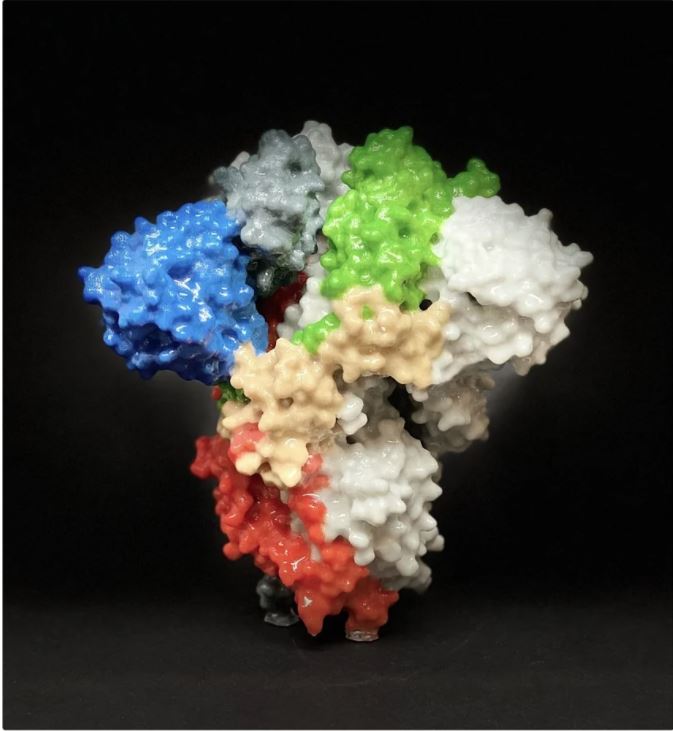
In the case of Pfizer’s and Moderna’s vaccines, the instructions in the mRNA injected are used by the cells to build the spike protein that the coronavirus uses to infect other cells. This spike protein is then recognized by the immune system and triggers it to produce antibodies and immune cells.

3D print of the spike protein of SARS-CoV-2, the virus that causes COVID-19. Spike proteins cover the surface of the virus and allow it to enter and infect human cells. Photo Credit: NIH

It will be another agonizing wait even as the vaccine signifies a turning point for the future.

Literary Piece of the Month

Strong Enough to be Weak

Mark Russell Caranzo ||

If only I could directly connect the LED to the battery just to see it light up, then I would have done it. I was sick and tired of seeing all those scattered resistors, transistors, and jumping wires across the breadboard, and the interconnected lines in the schematic diagram just seemed like messy road systems. It was 1 am and I was about to remove all the electronic components from the breadboard to start all over again—for the twentieth time. As I looked through the dorm hallway, I saw how happy my classmates were upon successfully assembling their circuit. That night, I was desperate. Yet, out of that desperation, I was able to unlock my superpower, which I never knew I had and I never thought I’d use, the power of vulnerability.


Back in elementary, I usually help my classmates solve the volume of the cylinder, determine the theme of a poem, or trace the circulatory pathway. Ever since, I was the one extending help, but never has it occurred to me that someday, I’d be on the receiving end.


Fear, frustration, and shame enveloped my thoughts that night. I was scared that if I approach my classmates, they’d refuse to lend a hand. I was discouraged that I’ve taken down all the writings on the board, yet there were many things that I missed out. However, I was left with no choice but to take a giant leap of faith into a sea of uncertainty. Fortunately, I made the right choice.


The world is filled with vulnerable people. Yet, it is difficult for us to accept our imperfections because we’re afraid to be judged. We are afraid to show our weaknesses because we feel exposed. Thus, we continuously restrict ourselves within our personal spheres, letting no one inside.

But I realized that it’s okay not to know everything. All of us are learning everyday, thus it’s important to leave rooms for mistakes and disappointments. By seeking help, we become mature and knowledgeable enough to understand that we couldn’t be experts at everything and that our shortcomings don’t define our whole existence.

The ability to embrace our vulnerabilities is a special talent that each one of us must possess because we could apply it in almost every aspect of our lives. As Dr. Brene Brown once said, being vulnerable makes us more compassionate to ourselves, more accepting to new perspectives, and more open to change. It revolutionizes the way we build relationships because we see the world in a fresh viewpoint where we have nothing to prove to justify our worth because we are perfectly imperfect the way we are.

This superpower would come handy at the university as I expect that life wouldn’t get any easier. As I enter into an unfamiliar environment, I’d be facing more challenges that would drain me physically, mentally, and emotionally. However, with this superpower, I’m confident that no failure would hold me back from my dreams because I know I’m not alone.

Yet just like any other superpower, embracing our vulnerabilities needs training and practice. The process is difficult, and it takes courage and determination to develop such skill. Thus, we must not pressure ourselves and only take the leap whenever we’re ready.

And at last, it worked. The fulfilment of finally getting the LED light up was priceless. I neither had the power to control electricity nor the power to replicate someone else’s ability, but I had the power of vulnerability. Indeed, if seeking help isn’t a sign of strength, then I’ll forever be proud of being weak.

Photo Contest Details

Calling all photographers! 📣

Another month means another photo contest, this time with a brand-new theme: Share Your Love. Seeing as Valentine’s Day is just around the corner, it’s the perfect opportunity to express your affection through photographs.

For this month’s photo contest, your photo must be of you “sharing your love” through actions. It could be as simple as a selfie with your loved one holding your gift for them or even just a picture of the gift itself.

Further instructions are detailed below:

1. Submissions must follow the theme.

2. Submissions must not contain any incriminating, offensive, or triggering content.

3. Date of submission must be on or before February 26, 2021.

4. Any late entries will not be accepted.

5. Anyone is free to join, regardless of camera.

If you are interested in joining, please contact either Shawn Elizarde or Kendra Osias.

Have fun, spread love, and good luck to all!

View our Photo of the Month here.

PSHS implements new admission system, RACE

Crishelle Phoebe Yu ||

Photo Credit: PSHS System Page

Due to the increase of COVID-19 cases in the Philippines preventing physical entrance examinations, the Philippine Science High School System (PSHSS) has implemented a new method of admitting students for the school year 2021-2022. In lieu of the PSHS National Competitive Examination (NCE), the system has decided to carry out a new alternative selection entitled Requirements for Admission, Criteria, and Evaluation or RACE.

The selection procedure shall be done in two stages. The first stage will determine the student’s predicted NCE grade (PNG) based on their final grades in Mathematics and Science in 5th grade. The second stage will be based on the student’s writing skills through making an essay and the applicant’s academic rank at the end of 5th grade.

The applicants will be ranked from highest to the lowest based on their final score and the top 240 will be considered as principal qualifiers for PSHS-MC (Main Campus). Depending on the decision of the system, the top 90 or 120 applicants in regional ranking will be considered principal qualifiers for their chosen regional campus.

SAEYLS: Reshaping the environment

Crishelle Phoebe Yu ||

With aims of honing leadership skills and creating an environmentally conscious generation, Sri Aman Environmental & English Youth Leadership Summit held an international competition last August 4-5, 2020. Participating schools for this year’s summit included delegates from Thailand, Indonesia, and the Philippines.

The goal of SAEYLS is to unearth, hone and develop the leadership skills and abilities of the youth and to enable them to lead the global community of tomorrow to be highly environmental-conscious as well as embrace environmental-friendly lifestyles. They believe that as leaders of tomorrow, the youth can definitely bring about this significant change in the mindset of the global community, and ultimately, improve the quality of life.

Kendra Osias, a delegate from Philippine Science High School – Eastern Visayas Campus, pointed out that the event was very educational, fun, and interesting.

“It was fun! A little pressure, yeah, because it was an international competition, but mostly fun! It was also super educational and interesting because there were so many different cultures that led to different writing styles, topics, etc. I also had fun writing poetry again, because it’s something I haven’t done in a while.”

, she stated.