by: Jeb Garganera || Photo Credit: Asian Football Confederation
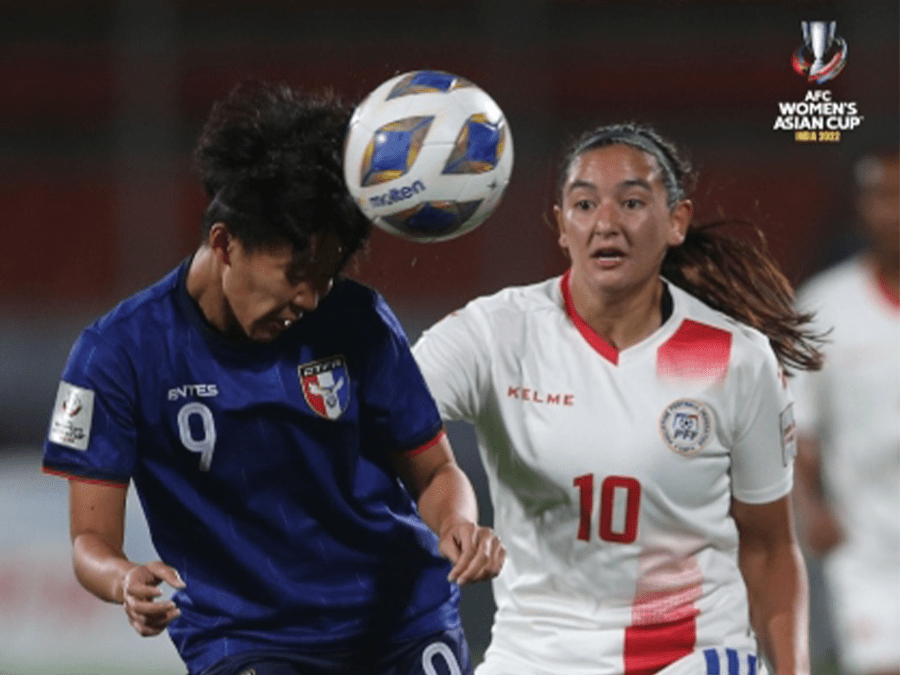
Carving their names as Filipino legends, the Philippine women’s football team has qualified for the FIFA World Cup for the first time, ending January 2022 with a shot at greatness.
On January 30, 2022, the Philippine national women’s football team bested Chinese Taipei on penalties, 4-3, at the 2022 AFC Women’s Asian Cup quarterfinals at the Shiv Chhatrapati Sports Complex in Pune, India.
Both teams were held at a 1-1 draw, with Taiwan’s Zhou Li-Ping equalizing in the 83rd minute after the Philippines’ Quinley Quezada opened the scoring for the match in the 49th minute.
The Philippine team scored their first goal just minutes after the second half began, after a technical play involving Sarina Bolden, Katrina Gillou, and Quinley Quezada, with Quezada giving the Philippines a 1-0 lead.
Zhou Li-Ping of Chinese Taipei scored the equalizer with less than 10 minutes remaining, forcing the match into extra time.
In the extra 30 minutes allotted, both teams were unable to advance in the draw, hence resulting in a stalemate at the end of the second additional period.
Following a few saves and a goal by goalie Olivia McDaniel, Sarina Bolden scored the game-winner, concluding the match with a semifinal spot and a chance at the World Cup.
“It’s an unbelievable moment for the group,” Head Coach Alen Stajcic expressed after the crucial match. “Now every young kid back home in the Philippines can be inspired… We’re really proud of each other, but we’re even more proud that we’ve inspired the next generation.”
In hopes of advancing to the finals, the Philippines will face South Korea in the semifinals at the Shiv Chhatrapati Sports Complex in Pune, India, on Thursday.
The World Cup, which Australia and New Zealand will co-host, will take place in July 2023.
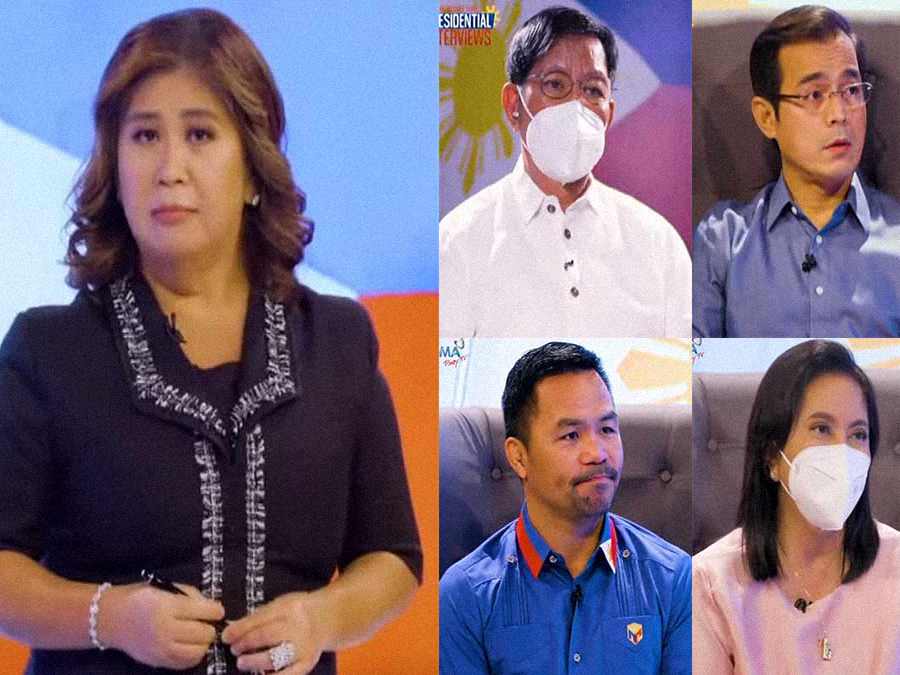
On Saturday night, January 22, GMA aired the three-hour-long special Jessica Soho Presidential Interviews. With the invitation of the leading presidential candidates Vice President Leni Robredo, Senator Panfilo “Ping” Lacson, Manila Mayor Isko Moreno, Senator Manny Pacquiao, and a no-show Ferdinand “Bongbong” Marcos Jr., the show garnered a great deal of attention from all over the nation.
In a statement, Atty. Victor D. Rodriguez — Marcos’ campaign chief of staff and spokesman — announced presidential aspirant Bongbong Marcos’ refusal of attendance in the Jessica Soho show, claiming that the award-winning veteran journalist and show hostess is “biased against the Marcoses” and would only focus on “negativity” when tasked with the responsibility of interviewing the candidate. Refuting this claim, GMA News then issued a response affirming Soho’s fairness and competency, saying, “The questions are tough because the job of the presidency is tough.” These events led to the spark of heated discussions online, particularly with the hashtag #MarcosDuwag.
This, however, did not stop the show. The presidential bets in attendance were placed in “hot seats,” as they were expected to share their answers regarding their capabilities and a wide range of controversial issues that the public deserved to be enlightened about. One of the biggest challenges was the limited time to express their thoughts on the given topic. The candidates were expected to keep their responses brief and precise, all while navigating through the subject in a way that leaves no room for misinterpretations.
While the interview was being aired, many people online both lauded and bashed the show for their bold questions that, throughout all of its segments, tackled topics such as the abolition of the Presidential Commission on Good Government (PCGG), illegalization of political dynasties, legalization of divorce, and more.
Being the presidential candidate with the most controversies attached to their name, numerous Filipinos were left wondering what former Sen. Marcos had to say about the matters discussed. However, most of his supporters remain unmoved by his absence. They justified his nonappearance by claiming that having to prove he is the best would be an “insult.”
Aside from the racket that surrounded Marcos’ lack of attendance, people have also expressed their disappointment at the exclusion of “Labor Leader” Leodegario “Ka Leody” de Guzman, as it could have been a chance for someone from the working class to present their platforms on a national level — a breath of fresh air among all the repeatedly established objectives that are never again pursued upon election. Although he was not invited, Ka Leody went on Facebook live to share his plans and opinions, which many people commended for his dedication.
The Jessica Soho Presidential Interviews Show was — despite the claims — an undeniably good chance for Filipinos to compare the leading presidentiables and reassess their candidate of choice in the upcoming elections. It is a shame that some people think it is below a presidential aspirant to grant the public an opportunity to evaluate them and their platforms.
In light of the recent events, it is crucial not to lose sight of what the Philippine elections are for. It is never for a political party, but it is always for the Filipino people and their future. As the elections are nearing, it is your responsibility, as a voter, to assess the candidates and see who truly stands for you. Do not let your pride create your choice, for it would only be regret that would shine your trophy when we are spiraled into another term of incompetence or, heaven forbid, something worse.
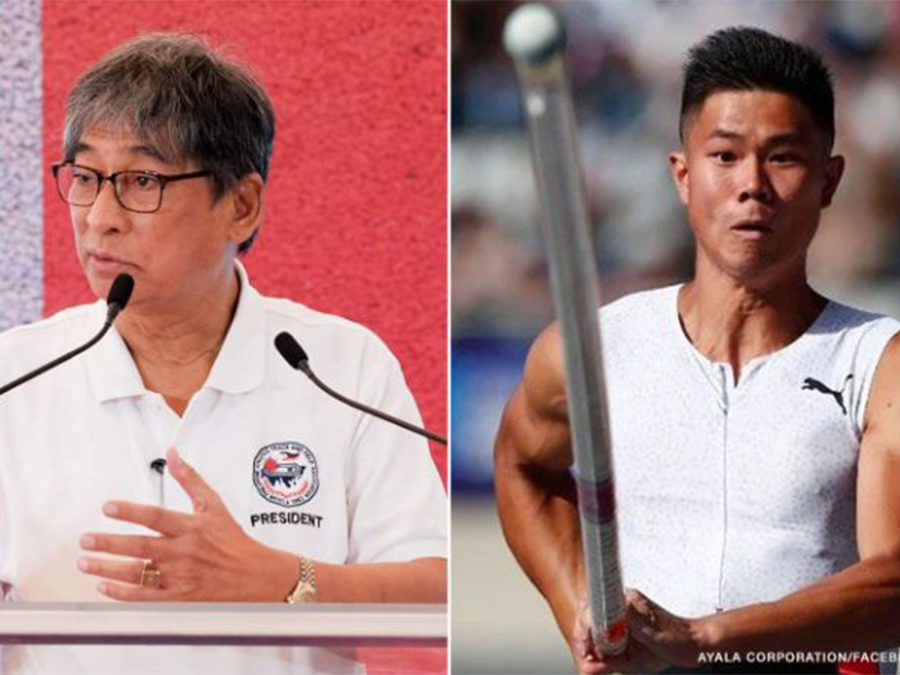
The fuss surrounding pole vaulter Ernest John “EJ” Obiena and the Philippine Athletics Track and Field Association (PATAFA) has become a controversial matter in the world of Philippine sports.
The association’s investigation concluded Obiena’s expulsion from the national team alongside counts of estafa for allegedly falsifying his coach’s salary liquidation. However, Obiena later presented documents revealing that his coach, Vitaly Petrov, received full payment, despite it being late for 2018 to 2019.
“During the season, I believe my number one priority is to train and compete the best that I could po and liquidation come next po,” wrote Obiena in an email reply to PATAFA. “I am not an accountant. This is not a crime.”
At present, even with Obiena’s agreement to mediation (a step in resolving disputes between two parties through a neutral person in the negotiation), the question still stands: whether PATAFA would stick to its decision or finally sympathize with the pole vaulter’s situation.
Obiena being ranked No. 5 in the World presents a state of uncertainty for his future, which, in turn, would likely affect his current performance.
Aside from carrying the pressure to maintain his current world ranking, his rift with the association would be mentally exhausting for the pole vaulter. This unnecessary baggage to carry only causes Obiena’s focus to drift further from the sport.
Additionally, this incident concerning the government’s allocated funding and those in private regarding his training overseas yields terrible PR not only for PATAFA, but also for Obiena, given his position in the spotlight.
The worst-case scenario for Obiena’s current status would be either naturalization or competing for a foreign country in pole vaulting. Following his rise in the world rankings, Obiena has been pursued by multiple nations for seven years, and is now likely to be received.
With all these taken into account, this issue between EJ Obiena and PATAFA puts to show just how unsupported the local athletes are outside of the limelight, even for those considered elites.
“I am fighting to bring honor and glory for my country. Others fight for ego or power. But that is not me. I fight for higher principles,” Obiena expressed.
Despite the postponement due to the aftermath of Typhoon Odette, the PSHS-EVC Community still ignited its holiday spirit during the Pisay E-Paskuhan 2021, a virtual Christmas party held last January 7 via Zoom.
The celebration was organized by the Student Alliance (SA) and was formally opened by the Campus Director, Yvonne Esperas. The first half of the program involved games and intermission numbers showcasing the wits and talents of the scholars. Additionally, past music and lip sync videos were viewed during the program, allowing scholars to reminisce face-to-face Pisay traditions. Breakout rooms were then opened for the students to spend time with their batch mates through games, virtual catch-up sessions, and photo ops.
The highlight of the event was the viewing of entries for the E-Paskuhan contests namely: Digiposter Contest, Makeup Contest, and the Christmas Jingle Contest. The competitions showcased the students’ creativity, talents in arts, singing and/or dancing, and their ability to embody the jolly yuletide feel of the holidays.
The announcement of winners for the said competitions was held during the flag ceremony last January 10. For the Digiposter Contest, 11th grader Aidan Torres bagged first place, 12th grader Shelby Lim landed second, and 10th grader Frances Sonon placed third. Lim also placed first in the Makeup contest by default for submitting the only entry in the competition.
For the Christmas Jingle Contest, groups were formed according to their respective SportsFest houses and were divided into two brackets: Bracket A consisting of students from Grades 7, 9, and 11, and Bracket B consisting of students from Grades 8, 10, and 12. For bracket A, House Lachesis finished champion, House Klotho finished second, and House Atropos landed third. For Bracket B, House Lachesis bagged third place, while House Atropos and House Klotho finished in a tie for the champion.
Torres, Digiposter Contest champion, expressed their joy to see their efforts showcased to the student body. Lim, the SA Treasurer, also shared that the SA is happy that they were given the chance to conduct something like this despite the damage of Typhoon Odette and the stressful pile of requirements.
“Seeing everyone enjoy the program we worked hard on to prepare was gratifying, so I very much appreciate those who joined and participated,” she said.
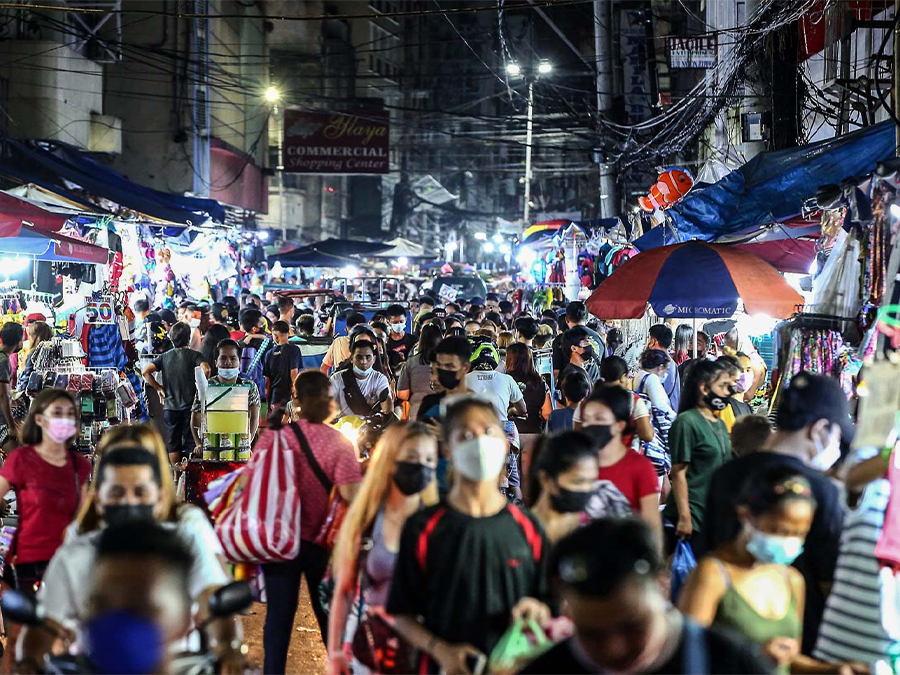
It was not so long ago when the number of COVID-19 cases dropped to a few hundreds. On December 18, 2021, there were only 22 new confirmed cases. However, on the first day of 2022, 4,445 tested positive, and the numbers have only risen since then.
In the past few weeks, the Philippines tallied its highest number of daily reported COVID-19 cases. As of January 10, 2022, there have been an additional 33,169 cases, surpassing the 30K nation’s infection mark. According to Dr. Guido David of the OCTA group, this may continue to increase in the coming days, and there is no certainty when it will peak.
In the last week of November, news broke out globally, announcing the new COVID-19 variant: the B.1.1.529 variant, more commonly known as the Omicron variant— a mutated coronavirus that was first reported in South Africa on November 24, 2021. According to a tweet by Bill Hanage, Associate Professor of Epidemiology at Harvard School of Public Health, “Omicron appears roughly 2-3 times as likely to transmit as Delta, and is expected to show a tendency to clustered transmission in large gatherings.” In fact, according to the UN, Delta has only 9 mutations on its spike protein, compared to that of Omicron with 32 mutations on its spike protein and 18 distinct mutations having a total of 50 mutations, which was the key to identifying the new variant. It has 70 times faster replication, and a higher possibility of re-infection.
According to the United States Center of Diseases Control (CDC) director, Dr. Rochelle Walensky, as of December 22, 2021, 70% of COVID cases in the US are Omicron, similar to other countries. The Philippines has yet to identify the numbers because of its incapability to detect 100% of Omicron cases. Yet it is safe to assume that the current surge is composed mainly of the Omicron variant due to the mutations that provide stronger infection and higher transmissibility.
Oksana Pyzik, Lecturer at University College of London, said in an interview with Al Jazeera that the five most common symptoms of the Omicron variant are runny nose, fatigue (mild or severe), headache, sore throat, and sneezing. Other symptoms, previously known to other variants, include coughing, shortness of breath, fever, muscle aches, especially on the lower back (New York Times, 2022), and loss of smell, have been less observed in Omicron. According to Vergeire, the first cases of Omicron in the Philippines had mild symptoms, similar to most patients worldwide.
Due to this faster rate of transmission, stricter restrictions will be implemented nationwide, announced presidential spokesperson, Karlo Nograles, on Wednesday. Areas under Alert Level 3— starting from January 14, 2022 to January 31, 2022— will include Benguet, Kalinga and Abra in the Cordillera Administrative Region; La Union, Ilocos Norte and Pangasinan in Ilocos; Nueva Vizcaya, Isabela and Quirino in Cagayan Valley; Nueva Ecija and Tarlac in Central Luzon; Quezon in Calabarzon; Occidental Mindoro and Oriental Mindoro in Mimaropa; and Camarines Sur and Albay in Bicol; Bacolod City, Aklan, Capiz and Antique in Western Visayas; Cebu City and Mandaue City in Central Visayas; Tacloban City in Eastern Visayas; Cagayan de Oro City in Northern Mindanao; Davao City in Davao region; Butuan City and Agusan del Sur in Caraga; and Cotabato City in the Bangsamoro Autonomous Region in Muslim Mindanao.
Experts say that the best thing to do is avoid social gatherings, maintain social distancing, and, if experiencing symptoms, self-isolate. But, most importantly, get vaccinated. Though there have been reports that current vaccines have reduced immunity against the Omicron variant, they are still effective against the severe symptoms and cases of breakthrough infection. Vaccination programs, including those for booster shots, are still ongoing, and some municipalities have provided incentives to encourage more people to get vaccinated.
Super Typhoon Odette, internationally named Rai, made its landfall last December 16, 2021. The typhoon ravaged several parts of Siargao, Dinagat, Surigao del Norte, Bohol, parts of Cebu, Palawan, and Southern Leyte.
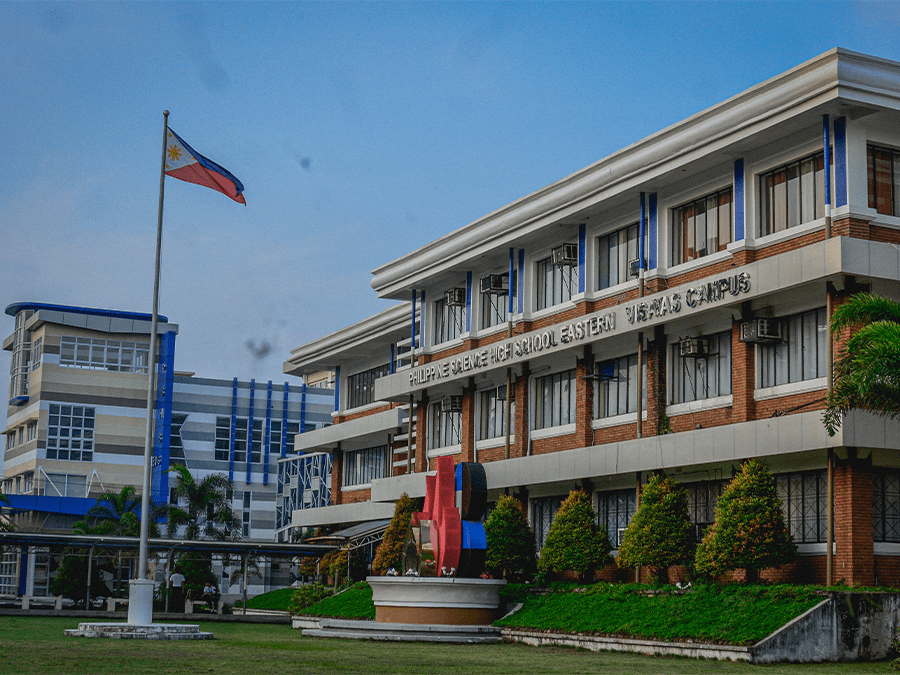
In response, the Philippine Science High School – Eastern Visayas Campus (PSHS – EVC), in coordination with the Local Government Unit (LGU) of Palo, served as a temporary evacuation center to a total of 117 families, 42 of which from Brgy. Candahug, Palo, and the rest being in-house residents— families of PSHS-EVC’s faculty and staff.
According to Mr. Oscar Peralta, who served as the Incident Commander of the school, preparation for the evacuation followed a pre-mandated plan issued by the government. It included a program of activities and a briefing for the different committees formed, headed by the Campus Director, Ms. Yvonne Esperas.
Peralta further elaborated that they had collaborated with Candahug’s Barangay Chairman, Barangay Secretary, and Barangay Kagawads in order to bring the residents to the school and maintain peace and order among the evacuees.
“It was very systematic, especially with the support of the utility and security personnel,” said Peralta. “We encountered no problems”, he added.
Because the school sustained no damages, relief goods were not provided by the Palo LGU.
The PSHS-EVC facility first housed evacuees during the aftermath of Typhoon Yolanda and will still continue to be a place of safety for evacuees in the future.
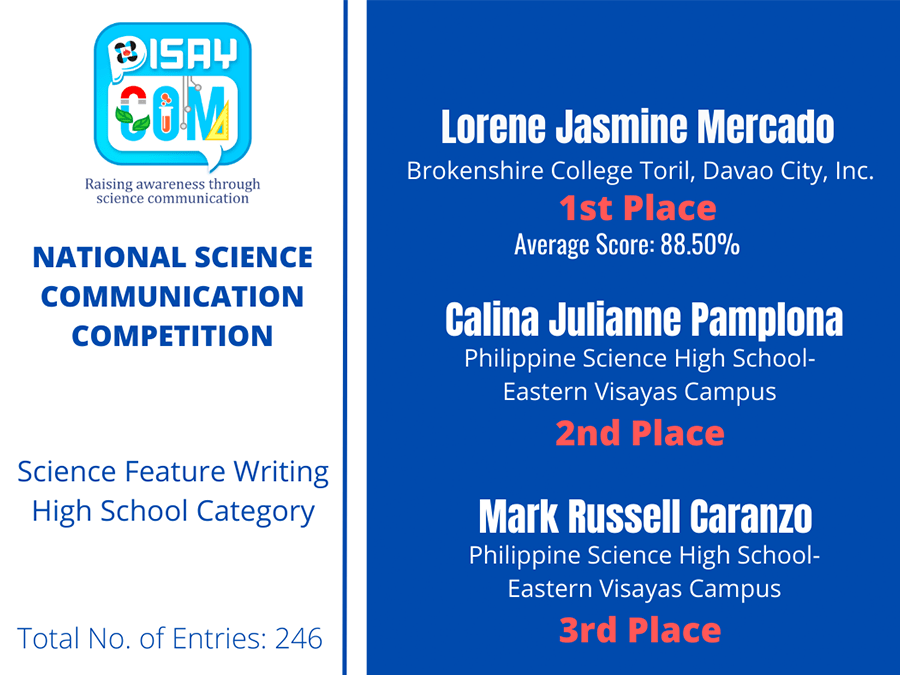
Two students from Philippine Science High School – Eastern Visayas Campus (PSHS-EVC) bagged 2nd and 3rd place under the Science Feature Writing Category of the PisayCom: National Science Communication Competition (NSCC) conducted last July 14 to October 1.
The PisayCom: NSCC, organized by the Philippine Science High School System (PSHSS) for all interested Grade 6, 10, 11, and 12 students from public and private schools across the country, aimed to encourage science communication among Filipino students and assimilate the importance of science communication.
The competition had four categories: Science Feature Writing for Elementary Level, Science Feature Writing for Secondary Level, Science Visual Designing for Secondary Level, and Science Short Video for Secondary Level. Winners in each category received prize money ranging from Php 500 to Php 20,000.
The winners were announced through a Facebook Live on the PSHS System’s official Facebook page last November 29. Calina Julianne Y. Pamplona, a Grade 11 student of PSHS-EVC, won 2nd place under the Science Feature Writing Category for Secondary Level with her entry “The COVID-19 Pandemic has Fueled a Mental Health Fallout – Here’s Why You May Be Suffering and How You Can Combat it”.
“Placing 2nd was a shock to me. I didn’t expect to win any prize since I didn’t spend a lot of time on my submission, thinking it would just be another good experience for me. It certainly was, though, win or lose!” Pamplona shared.
Mark Russel D. Caranzo of PSHS-EVC class of 2021 also won 3rd place under the same category with his entry “Disney’s Frozen Reveals Important Clue for Maintaining Mental Well-being.” According to Caranzo, it was a memorable experience as he incorporated the iconic movie Frozen into his article. Moreover, he expressed that the writing process was both fun and nerve-wracking since the deadline for grade 6 and 12 students of School Year 2020-2021 was set almost two months earlier than the rest of the contestants.
The project coordinator of the competition, Rommell Ross C. Oba, hopes that through the contest, the participants could better understand the science topics related to their categories, gain an idea on how to present a topic to a specific audience creatively, and learn the importance of conducting a thorough and accurate literature search.
Caranzo shared that it would be better to set your main goal for the production of an article that you can be proud of. He emphasized treating the writing process as a break from all the stresses of school. Pamplona also added to simply go for it, whatever the competition may be about. “The best thing that can happen is that it will potentially help you build your portfolio, but if not, you’ll still learn something along the way,” she stated.
The question “Would you be interested to join this?” kept echoing in my mind as I stared at the ceiling above.
The Ritsumeikan High School is once again hosting another project, and Ma’am Remz, my former English teacher, had just asked me if I were interested in joining.
I consider myself an introvert, so the thought of whether to grab this rare opportunity or to just stay in my comfort zone kept me awake in the middle of that night.
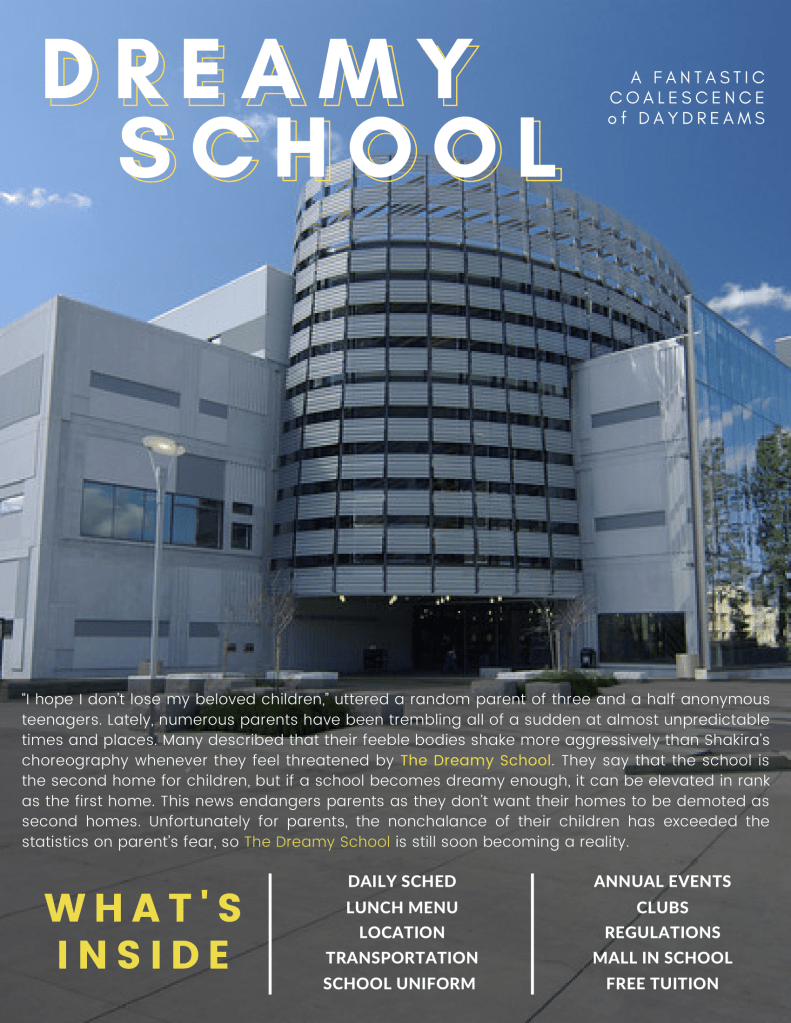
For the past two years, the Ritsumeikan Junior and Senior High School, through RitsMentor, has hosted multiple projects to strengthen bonds and foster friendship among students worldwide amidst the pandemic. This year’s project was named “Dreamy School Project”, which intended to create a magazine through the collaborative efforts of participants from different countries. It aimed to boost the conversations among students by letting them establish their ideal schools by using their imagination. However, as the borders of some countries are still closed due to COVID19, the event was held online.
My hesitation notwithstanding, I decided to take on the challenge and said yes. Together with Kuya Jim Cadion, Ate Minoelle Aralar, and Patricia Galapon, we set out as representatives for PSHS-EVC in this month-long activity.
The participants were divided into two major groups: one group scheduled to meet on Saturdays while the other on Sundays. For the Saturday schedule, participating students were mostly from Asia and Europe. On the other hand, the Sunday group was composed of students from Asia, North and South America. The groupings were in consideration of the time zones and schedules of the participants. We, students from PSHS-EVC, were scheduled to join the online meetings every Sunday at 9:00 am, JST from October 3 to November 14.
On the first Sunday, we were grouped into five teams of five, with each team containing students from different countries. Three of my group mates were from Mexico, Japan, and Texas, while our fifth member did not show up. When we first met in the Zoom breakout room, the atmosphere was utterly awkward. Everyone was shy around each other, but we pushed ourselves to be as active as we could in getting to know every member and sharing different information about ourselves.
The first few Sundays were allocated for the group discussions. We were tasked to share about our school and country. We talked about how similar or different we were from the time the school would open, the schedule we follow, the events we conduct annually, the facilities we have, and much more. As the holidays were fast approaching, the topic of our culture was also brought up. We shared about how we celebrate yearly occasions in our country, and it was interesting to note that even though Philippines and Japan are both located in Asia, the culture of Philippines was a lot more like Mexico’s.
The remaining Sundays passed by in a blur. After talking about our individual experiences, we combined what we had discussed and used them as references for our ideal school. We, then, finalized the details of our dream school and placed them in a shared Google document so that anyone can feel free to add their ideas anytime. Afterward, we assigned each other to write some specific parts of the magazine and create a layout for these on our shared file in Canva, a graphic design platform.
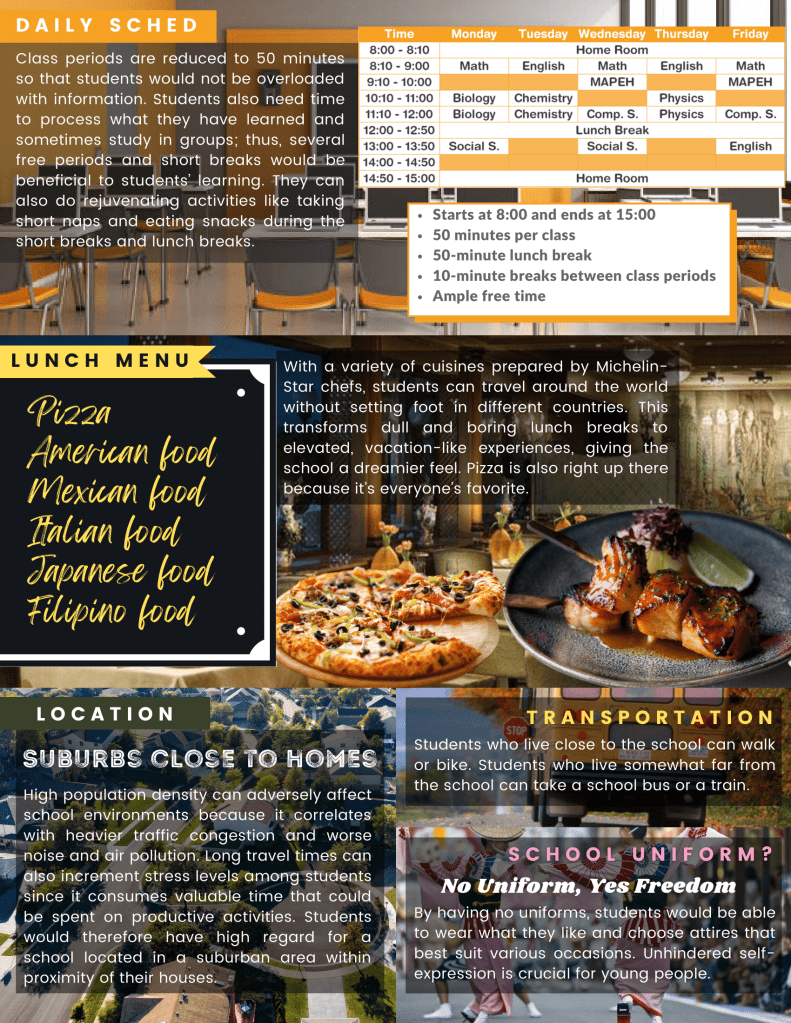
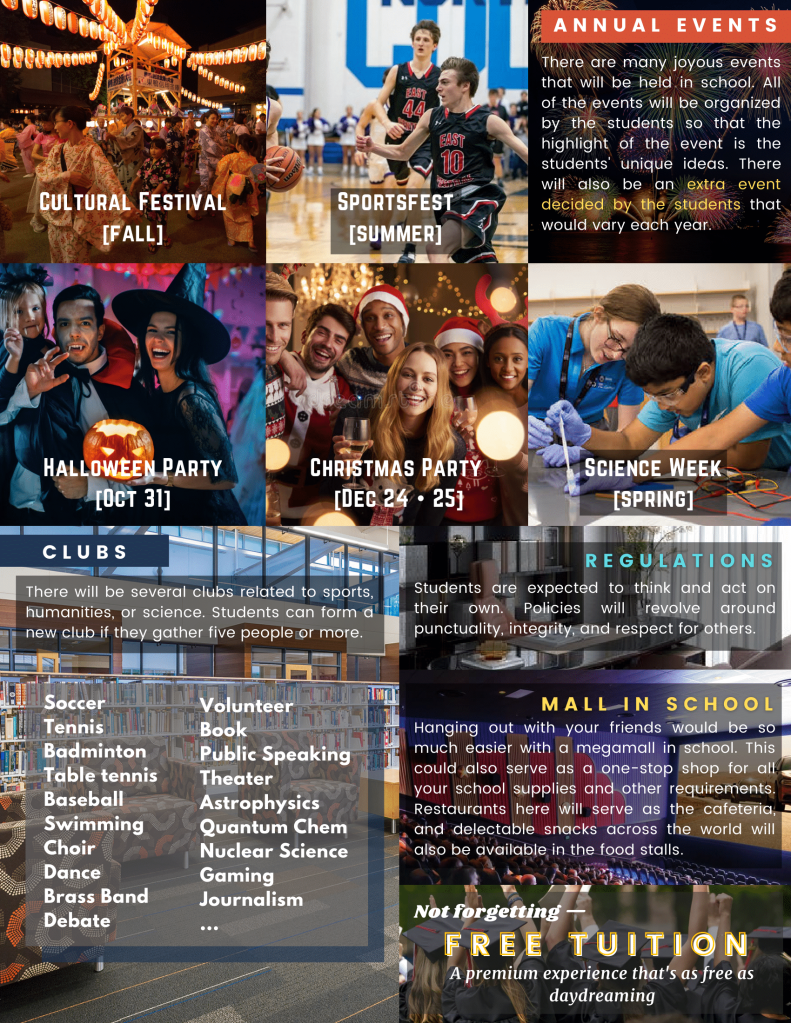
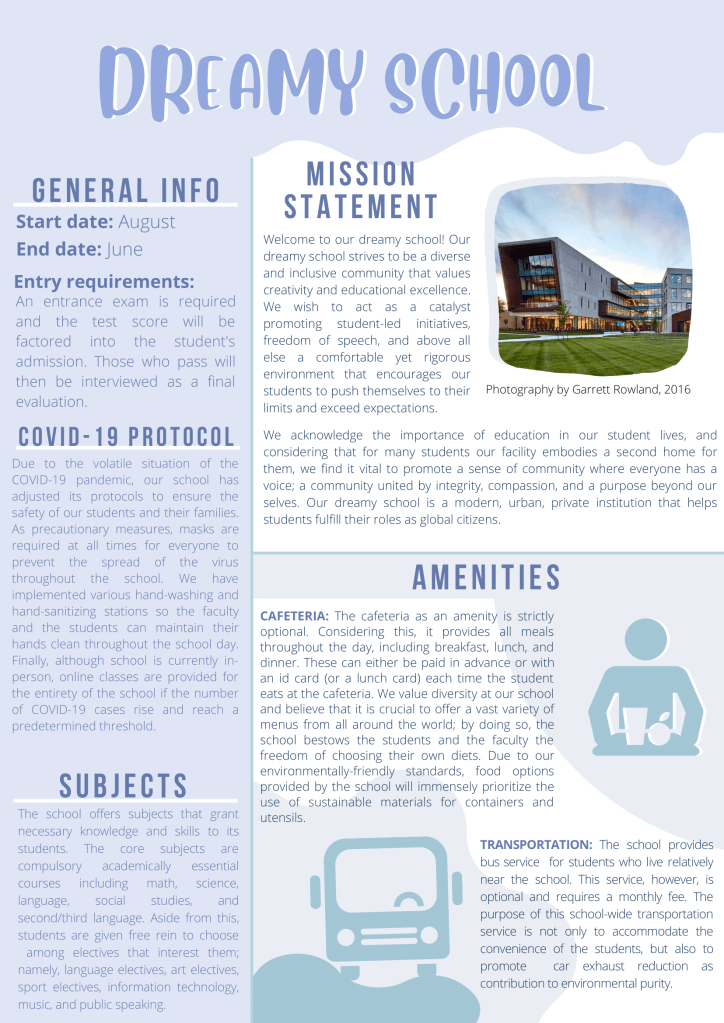
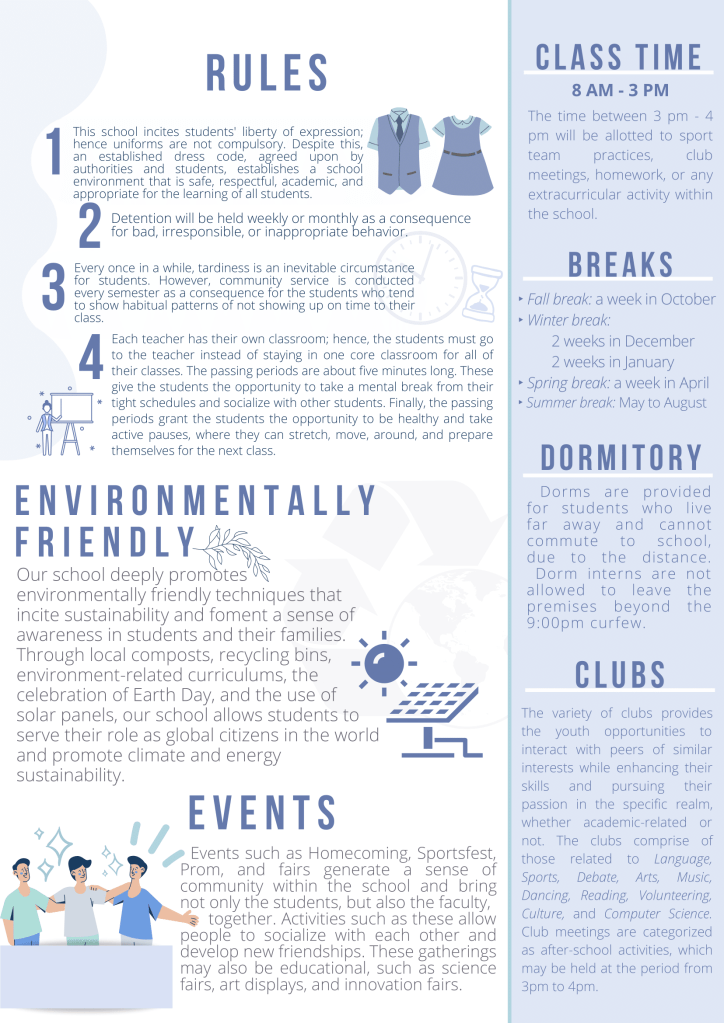
Below are the pages that the PSHS-EVC students had created with their individual groups:
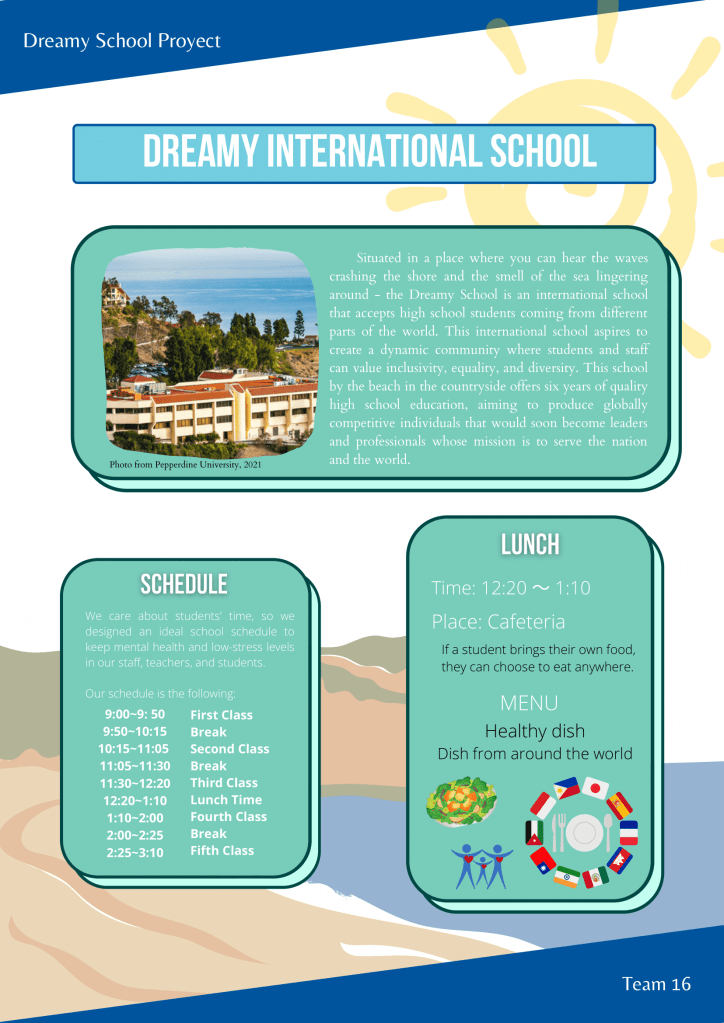
This three-paged portion was created by Kuya Jim and his group, Group 17, who were composed of two students from the USA, a student from Japan, and from Spain. Kuya Jim was able to contribute the first page, the articles about the daily schedule, lunch menu, and location.
Patricia was in Group 15, together with students from Japan, Columbia, Mexico, and USA. They were able to create this detailed and pleasing to the eye, two-paged section. Patricia was the one who wrote about the subjects, clubs, transportation, dormitory, and some of the rules.
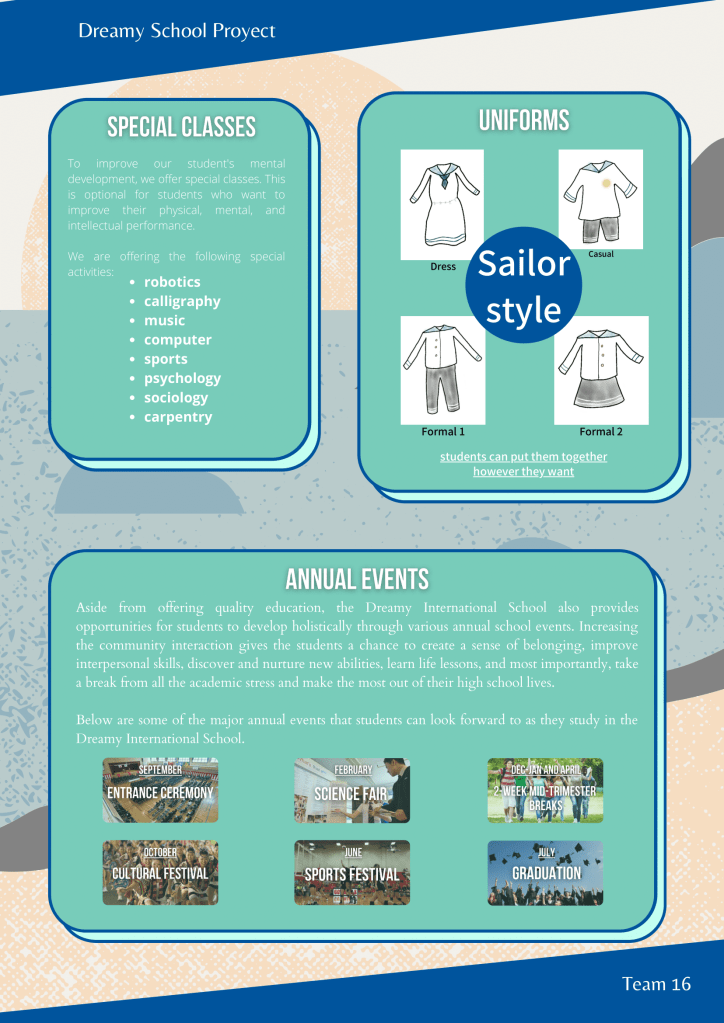
These two coastal-designed pages were created by our group, Group 16. Unfortunately, only three of us, me and the students from Mexico and Japan, were active during the whole course of the project. I was assigned to write the introduction and the annual events.
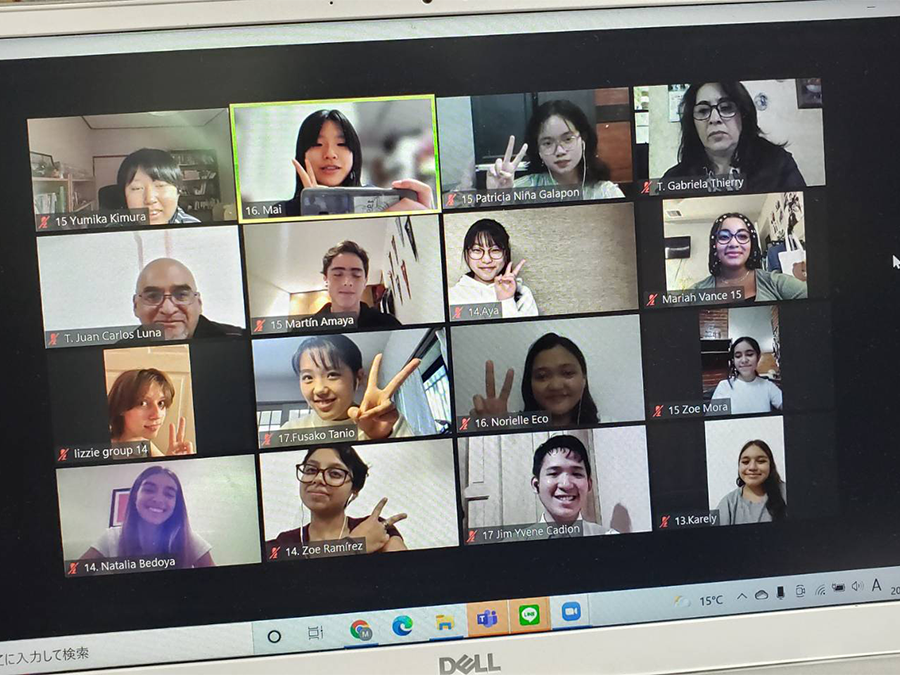
The group presentations were held on the last day, November 14, through Zoom. It was such an amazing experience to witness each group proudly presenting their creations. A poll was conducted afterward to see which presentations the participants liked. Surprisingly, Patricia’s group got 50% of the votes, Kuya Jim’s got 21.4%, our’s got 14.4%, and the remaining two groups got 7.1% each. We finished the day with a photo op., and sadly, it was time to say goodbye. It was such a bittersweet moment to watch our newfound friends leave the Zoom call one by one while bidding their farewells, signifying that this month-long endeavor had come to a close.
Honestly, the whole situation was nerve-wracking for me as it was my first time joining this kind of event. I was not sure how I was going to survive this month-long activity as I was not used to interacting with new people. Nevertheless, the anxiety did not stop me from looking forward to the Sunday meetings with my groupmates. I was determined to push myself beyond my boundaries, and I am proud that I was able to pull it off. The excitement and curiosity that I felt were indescribable. I have gained a lot from this experience, and I can now say, I do not feel any ounce of regret saying yes, as it was all worth it.
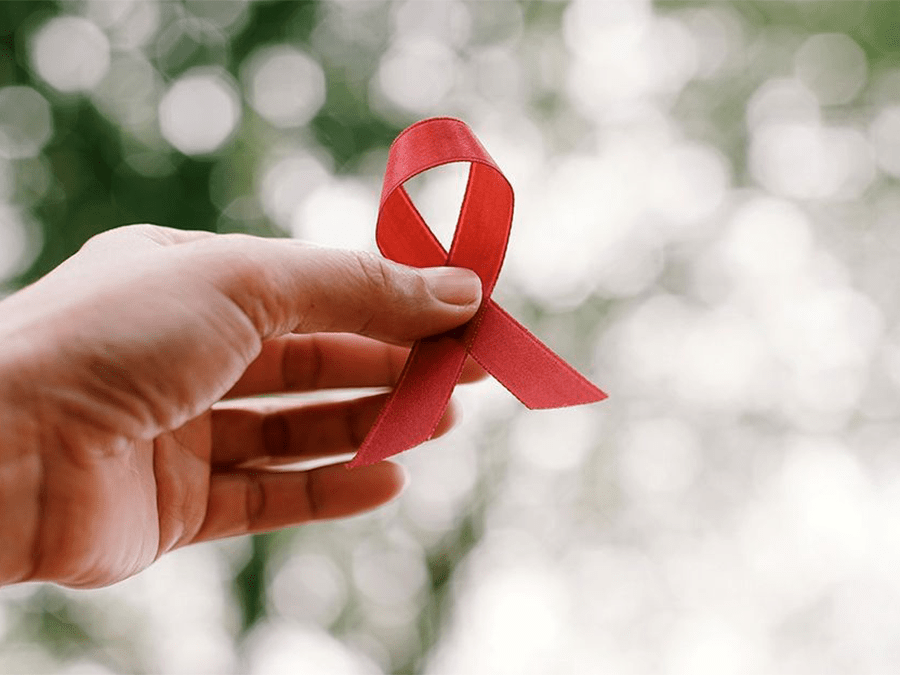
by Christian Lawrence M. Tan || Photo Credit: Everyday Health
We live amongst people with all sorts of illnesses, from the hypertension your grandmother might have to the diabetic cousin anyone could have. However, why is a full-blown freak-out the first reaction to HIV? People think their blood is filthy, soiled as the rag you use to wipe your dinner table, or like a wound that never heals and spreads like wildfire just by being near. All the people ever see in them now is their blood and what stains it.
Fear-mongering by the media makes it worse, as the stigma only grows with knowledge. People are scared because they know of it, but their hostility comes from not knowing about it. They are aware of the danger the disease itself poses but feel justified in their scorn of the afflicted because they don’t know how it feels and has no desire to contract it themselves. Despite all the knowledge available to the average person about this stigma-clad disease, anyone and everyone can still be ignorant.
HIV stands for “Human Immunodeficiency Virus.” It attacks the body’s immune system until it begins to struggle against other diseases. If left untreated with antiretrovirals for long enough, it develops into the condition known as AIDS (Acquired Immunodeficiency Syndrome). By then, the human body is so weak to infection that something like a little cut can be life-threatening. As an STD, it is spread through sexual contact, or mediums such as blood, semen, and vaginal excretions.
One would think that there would be more sympathy from the common man given all the information of what HIV/AIDS positives suffer through, but that is unfortunately not the case. And so the big question is: do they really deserve it? After all, it is not as if they willed it. The logic that victims go about philandering in an attempt to catch it on purpose is simply foolish. By judging them and isolating them from society, you ostracize these suffering individuals simply because you hold prejudice against them.
Some might say they are being punished for their carelessness and being ‘impure’, but again, does one see themselves planted on the ground before they even spot the rock they will trip on? People like to pretend they’re in the right because they feel that they can see the situation unfold from all sides, but they fail to consider what it might actually be like for the person suffering.
Breaking down the barrier is the first step of creating an environment where one can freely reach out. There shouldn’t be a difference in how people with HIV or AIDS are treated. Place yourself in their shoes for you to understand them better and for you to grow as a person from it. It is time to stop seeing these people as filthy-blooded monsters, and rather a time to regard them as the good average person they were, and still are, supposed to live as.
The Philippine Science High School – Eastern Visayas Campus (PSHS-EVC) obtained a set of achievements as selected Grade 12 students participated in the 18th National Youth Congress (NYC), held last November 20-21 via Zoom, alongside other Filipino high school students.
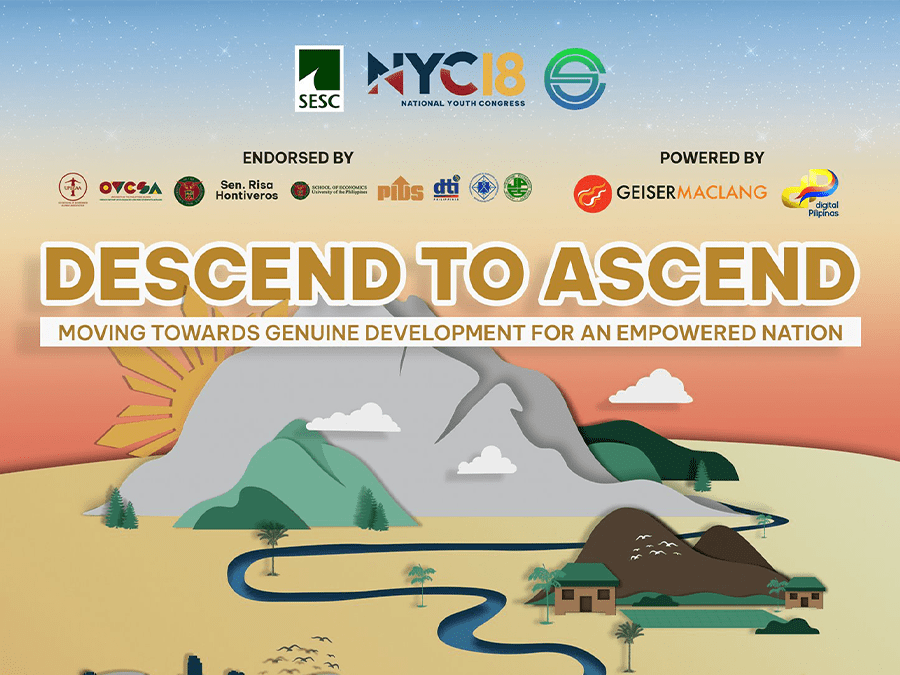
The NYC is an annual congress presented by the University of the Philippines (UP) Economics Society and UP School of Economics Student Council. The event aims to provide high school students with an engaging introduction to economics and to demonstrate the power of economic analysis in clarifying relevant societal issues. This year, with the theme, “Descend to Ascend: Moving towards Genuine Development for an Empowered Nation”, the convention highlighted the importance of human welfare in development through a series of talks and activities centered on the role of economics and the youth in developing people-centered policies and initiatives.
Erika Flanco, one of PSHS-EVC’s delegates, finished as champion for the CAPTURE: Infographics Making Competition. Flanco’s winning piece was composed of imagery that showed how the world looked during the initial implementation of lockdown. According to her, the airplane routes incorporated in the infographic were inspired by how everyone rushed back to their hometowns. She noted that one may also view it from the perspective of the virus spreading and inevitably affecting the various sectors— including wage workers, urban poor, women, and children, overseas Filipino workers, persons with disabilities— that are the central focus of the infographic.
Flanco emphasized, “The overall goal was to inform our fellow Filipinos on their [sectors’] current disposition.”
Besides the CAPTURE contest, she also competed in the INK: Visual Arts Competition.
Jim Yvene Cadion, Julianna Nebrija, and Bryan Dela Cruz placed as semi-finalists in the SMART: Idea Pitch Competition. Cadion and Dela Cruz qualified as semi-finalists in the Economics Quiz Bee, with Jun Kwon Shin and Jean Lourd Misa as their substitute representatives. Dela Cruz also participated in the INK: Essay Writing Competition. Nebrija and Misa along with Kirsten Casas competed in the GLIMPSE: Video Making Competition. The delegates were coached by Economics teacher Emman Patata.
Patata shared that he was proud of all the delegates for being able to share their outstanding outputs with the rest of the country. According to him, he recognized the willingness of the delegates to make the world a better place, and he wanted to provide a platform for the students to apply what they learned in his subject to gain a deeper comprehension of real-world, societal issues.
“I wanted them to use their talents, to have their voices and ideas be heard by their fellow youth nationwide… if we can see talents from our students, we should encourage them to use it for the greater good,” he expressed.