Pisay-EVC community reignites Christmas spirit

By: Mark Lester Cartel || Photo by: Michel Malaqui

Christmas season is in the air as Philippine Science High School-Eastern Visayas Campus (PSHS-EVC) held its Christmas tree lighting ceremony last December 1.

The opening program took place at the gymnasium, which was led by Batch 2027’s Aliyah Agang and Aaron Elicanal. Said event featured performances from various Alternative Learning Activities (ALAs).

Sikatala, Reeltalk, Malay Mulat at Mamamahayag, presented short films about people’s different lenses of Christmas. Then, the Rondalla group added a musical touch to the festivities with their rendition of the Filipino classic, “Pasko Na Naman.”

Further, Musikanta contributed to the musical vibe with their performance of “Paskong Pasko Na Talaga,” while Pisayaw dazzled the scholars with a festive dance and led the Parade of Lights.

“After so many years, we, the beating heart of PSHS-EVC, are gathered here to properly relive the Christmas spirit within our community once more,” Samantha Macabit, Alquemie President, said in a speech during the program. 

She also emphasized how ingrained the season of giving is in the Filipino culture, considering how Filipinos hang up Christmas decorations and play Christmas music as early as September.

“Through collaboration, everyone making an effort to cooperate and knowing the essence of what we’re trying to celebrate were the key components of making this event possible,” Donnabelle Conde, ALA Coordinator said.

As scholars gathered in front of the academic building, they witnessed the lighting of the Christmas tree, signaling the official start of the holiday season at PSHS-EVC community. In the spirit of giving, the school administration presented gifts to the school’s security guards and utility.

Ending the program was the announcement of winners of the Parol making contest. House Carpho’s Category A secured the third place, while House Thalette’s Category A claimed the second spot. House Carpho’s Category C clinched the first place.

It’s Right to Hate the Young

by Arianne Enderez || Cartoon by Kyle Nase

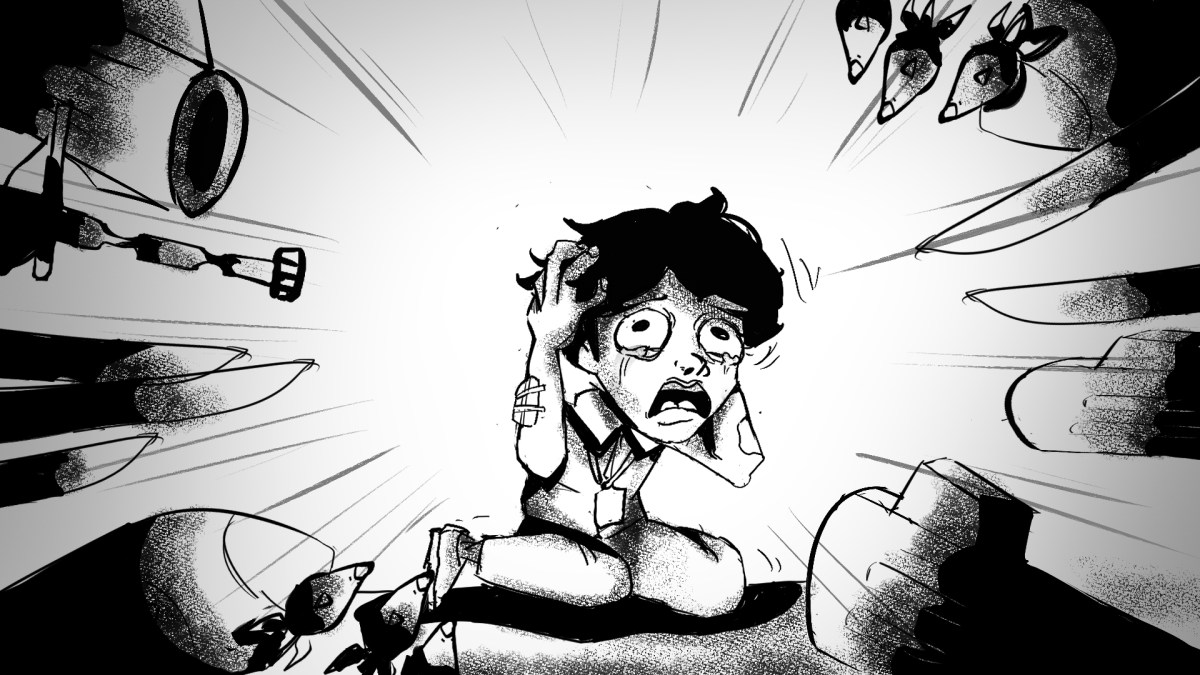
I hate freshies. Freshies make my blood boil. These kids are so disrespectful and culturally unfunny that it makes me want to physically turn into a propeller and catapult them at 100 mph.

The previous statements expressed before this paragraph are sentiments that every senior probably felt when a new batch of PSHS students came onto campus. It is customary, considered a tradition and culture even, to feel hostile towards these 11 to 12-year-old kids who are fresh out of elementary school. But, are these kids that bad? Are they really as intolerable as our higher-ups complain? Are these kids that big of a narcissist, with prideful and overly pretentious egos? Do they deserve the hate and rage that sprout from their seniors? 

The roots of ‘freshie hating’ can be traced back to the high demeanors of swaggering freshmen who freshly passed the National Competitive Examination (NCE)—considered one of the hardest entrance exams in the country, with only around 10% of examinees capable of grabbing a slot—with a desire to establish validation, relevancy, and inclusivity. Most of the time, this attempt of mentioned values falls short to achieve its objective due to its lack of knowledge and understanding of Pisay culture. Which, in return, drives seniors to loathe or hold a grudge against these 11 to 12-year-olds. 

One of the primary examples of these scenarios occurring comes from an online page on Facebook where students belonging to Pisay (or even those outside the school) can anonymously submit their undying love confessions, giddy messages to mess with their friends and complaints or rants about contemporary societal issues — Pisay Hugot. These anonymous submissions are posted for everyone in the world to see if approved by one of the admins of the page—following strict guidelines such as the ban of hate speech, bullying, and distasteful topics—but somehow, anonymous submissions that clearly exhibit this essence still surpass the filters, even under the surveillance of an external party. Consequently, anything a freshman states, even if it is painfully evident that the child lacks the mental maturity and critical thinking to create an insightful and modest opinion about a peculiar topic, is posted for the whole world to view.

If we’re educating these children to be more considerate and sensitive about their verbal and physical inflictions towards other people, wouldn’t we get to avoid instances where they lack these requisite features? Though it seems like we allow this type of behavior for the sole, and vile mindset of, “they’ll learn the hard way,” only for them to receive the brutal backlash that results from the severity of their consequences. Instead, we should cultivate an environment that is complemented by a support system, providing them the guidance and understanding they need to navigate through challenges. Which includes providing them with less harsh reality checks, and assessing their current behavior. Although some freshmen will likely refuse to change and remain the ignorant, self-centered character that they are; it is with hope however, that some will listen and actually make an effort to improve for the better. 

The mental age gap between a recent primary school graduate and an 8th grader who had already been grilled with the brutal reality and lifestyle of a scholar —is like a 5-year-old kid talking to a 30-year-old man going through a midlife crisis. We should not expect that these children are emotionally and mentally prepared to face the scary environment which is known as the Pisay culture from the get-go. “It’s just culture,” they say, but that culture needs to be reevaluated to better conditions to create an environment that is welcoming for all.  

Nothing Anywhere Can Compare

By Zachary Tan || Photo Credits: Reading Rockets

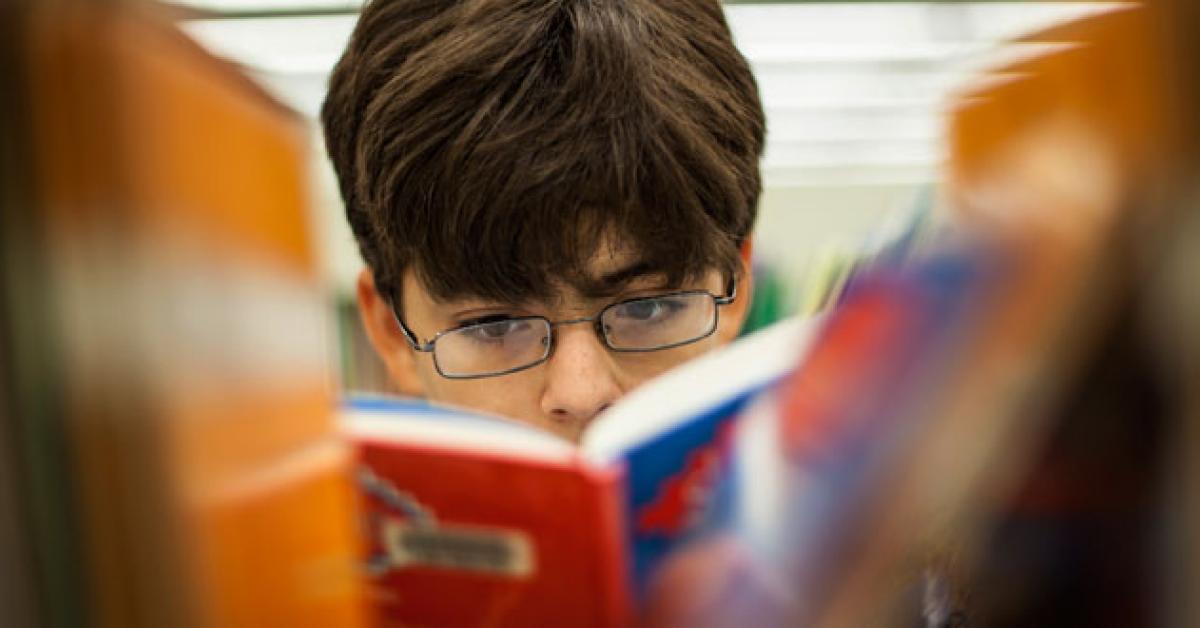
“He had six small wheels, a short stumpy funnel, a short stumpy boiler, and a short stumpy dome,” the beginning of possibly the most iconic of its stories. When you hear those enchanting words, you know you’re in for a wild adventure. From a heroic escape from death to a weary old man given another chance to prove himself once again, the Railway Series has got it all. You may not have heard of this unsung hero of children’s stories, but you definitely know of the television series it spawned, Thomas the Tank Engine and Friends.

Those innocuous stories of sentient locomotives and their hijinks have had immeasurable effects on my personality and myself as a whole to my benefit or, as my “friends” like to say, to my detriment. Those friends of mine can also attest to my englishero-ness, which I partly attribute to my fascination, maybe addiction, to the television series and books.

There are a multitude of reasons why I still come back to a children’s book series despite being in tenth grade, aside from me being a five-year-old reincarnated into a 15-year-old’s body, is the boundless respect the author, Reverend Wilbert Awdry, had for the series, characters, and greatest of all, the readers, like Little Timmy and I. The series treated the reader, whether they be adult or child, with a level of maturity, as Awdry empathized with the poor souls, in the guardians and parents, who would have to constantly read and reread the stories to their children and the conspicuously older man-child sitting next to them. In turn, this led to little old me learning crazy big new words like “indignity”, “deputation”, and “quay”, which I probably misused anyway.

Aside from my apparent unceasing barrage of grammar and spelling corrections, my friends tell me that there’s another reason why they are figments of my imagination, that being my “challenging” personality. There are many great moral lessons in the series, big and small. However, what I admire most about its lessons is their simplicity yet not being spelled out in large bold font. Children may be young and slightly dim, but they are absolutely not complete blockheads who are incapable of critical thinking. The slow-paced nature of the Railway Series’ stories also allows for complete comprehension of the stories, which is why it has always appealed to a younger demographic and those on the autistic spectrum. This all shows the love Awdry had for not only his stories but for the children reading his books as well, even if one or two may end up a schizophrenic nerd.

All this talk about an old children’s book series from World War II is all for me to say that books are for everyone. If even a self-avowed non-bookworm like me can find a series or two I like, anyone can. Oh, who am I kidding, it’s obvious that you should buy me the Complete Series this Christmas. Thanks!

Pisay scholars bring book characters to life

by Gabriel Vinci Tamayo || Photo Credit: Danielle Anos

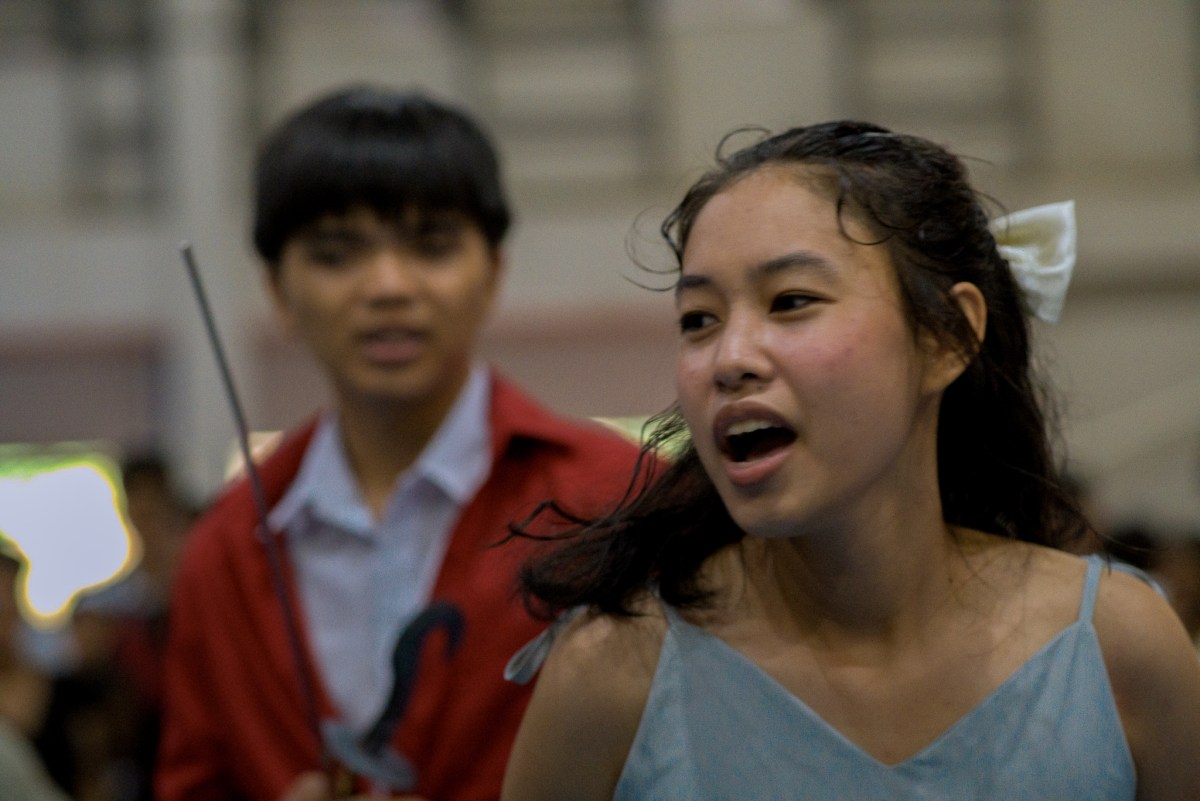
Pisay EVC scholars dressed as their favorite book characters for the Book Look contest held in celebration of the 89th National Book Week and National Reading Month on November 24 in the campus gymnasium.

       Said event was one of the three competitions held for the 89th National Book Week and National Reading Month Culmination Program spearheaded by the school’s English Unit and the Book Lovers’ Club, in which students from Pisay EVC were allowed to dress as book characters of their choice. 

The winners for the contest were picked based on votes collected in the morning. The students awarded were Alyssa Avorque from Batch 2029; Leira Ponferrada from Batch 2028; Dhanielle Guino-o from Batch 2027; Mary Québec and Shenna Ongbit from Batch 2026; Esmar Abobo from Batch 2025; and Rio Rañin from Batch 2024, with each person being awarded P500. 

      “Winning the contest made me feel accomplished because my efforts in preparing my costume were recognized,” Abobo said.

      Two other events took place this week, the Live Museum and Newspaper Poetry contests. The Live Museum showcased the acting prowess of several groups of Pisay EVC students, as they created their own versions of classic children’s books and acted them out in the campus gymnasium. The stories showcased in this event were two renditions of The Little Red Riding Hood, Peter Pan, The Three Little Pigs, Beauty and the Beast, and Tangled. The award for third place went to Batch 2027s rendition of the Three Little Pigs, the award for second place went to Batch 2024s version of The Little Red Riding Hood, and the award for first place went to Batch 2025s rendition of Peter Pan. The first placers received P5000 while the rest of the winners received consolation prizes.

            “It was an interesting experience to say the least and I’m glad that we at least performed our best and won first place,” said Sebastian Ong, one of the members from the cast of Batch 2025s Peter Pan.

           On the other hand, the Newspaper Poetry Contest let students write and submit haikus with the theme “Read, Reread, and Relieve”. Their outputs were then displayed at the front of the library and judged by the school librarians and the faculty of the English and the Filipino Units. Christine Mutthan from Batch 2027 and Lakambini Hoo from Batch 2026 won third place, Poimen Deb Agnila from Batch 2025 won second place, and Nathan Dela Torre from Batch 2024 won first place. The winners were awarded P200, P300, and P500, respectively.

        “I feel honored that they chose my work.” said Nathan Dela Torre, the winner of the contest. “My work was about children being the future of the world and how we can educate children through books,” he added.

          BLC Adviser Angelica Cagara, also one of the campus’ librarians, closed the program with a speech congratulating the contest winners and thanking several school organizations along with the students for participating in the event.

        “A round of heartfelt congratulations to all the winners of our contests, the winners of the Newspaper Poetry Contest, Book Look and Live Museum. Your unwavering effort, creativity, and talent in bringing literary characters to life have truly elevated the essence of this celebration,” she said. “Your participation made this celebration truly memorable. Thank you everyone for contributing to the magic of this celebration. Until we meet again, happy reading and may the pages of your favorite books unfold new adventures,” she added.

           Awards for the Top Book Borrower category were also given to students from all grade levels who were avid library book borrowers.

Stude journos attend training-workshop series

by Samantha Macabit || Photo Credit: Joshua Sudario

To capacitate the skills of selected Philippine Science High School-Eastern Visayas Campus (PSHS-EVC) student journalists, The Science Net and Ang Pukot kicked off the first day of training-workshop series, November 18. 

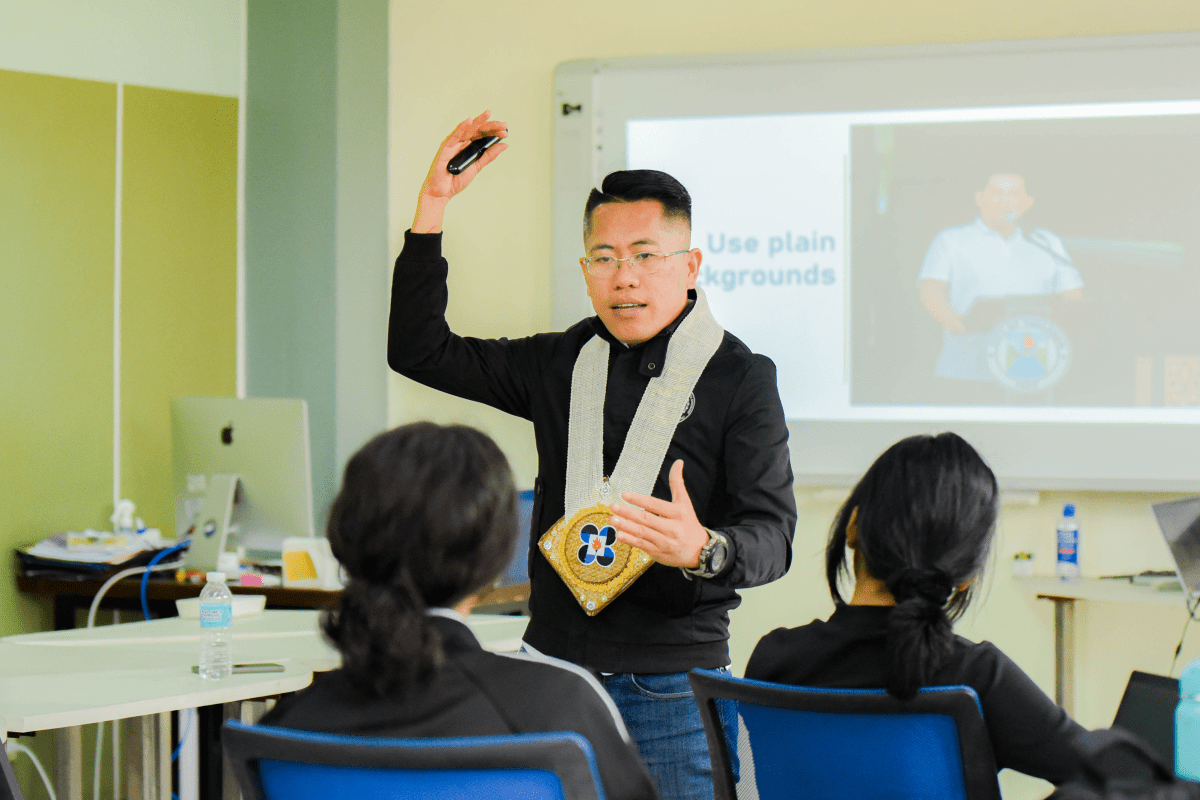
Jenette Fariola-Ruedas, former reporter of ABS-CBN News and current information officer of Region 8’s Commission on Elections, tackled the rules and elements of news writing. 

“The words that you will use to tell a story affects what your audience will think and feel,” Fariola-Ruedas said.

On the other hand, Ed Tiquen, a photojournalist for the Department of the Interior and Local Government – Regional Office VIII, handled EVC’s photojournalists.

Tiquen said you cannot appreciate a story without photos, highlighting the importance of the photojournalists as they take photo documentation in all kinds of events. 

Ronald O. Reyes, a veteran journalist and educator, and 2015’s Outstanding School Paper Adviser in Leyte, was the chosen speaker for Editorial Writing and Column Writing. 

“You owe it to your readers, as you become their eyes and ears, so make sure you do your job as part of the publication,” Reyes said.

The training was organized by publication advisers, Jerry Serdeña of The Science Net and Darry Mae Portillo of An Pukot. 

Scholars in News Writing, Editorial Writing, and Photojournalism, are selected to be part of the first day. Meanwhile those in Editorial Cartooning, Sports Writing, Feature Writing, Science and Technology Writing, Online Publishing, and Collaborative Desktop Publishing, and Radio Broadcasting are set to take part on the second day, November 27. 

The second phase of the training is expected to happen every Friday in January 2024, where the periods of universal break will be used to prepare the student journos for contests in campus journalism, such as the Area Schools Press Conference.

PSHS-EVC, BFP Palo conduct quake, fire orientation

by Daneil Cerdeña & Clarissa Vicentillo || Photo Credit: Kiara Gaut

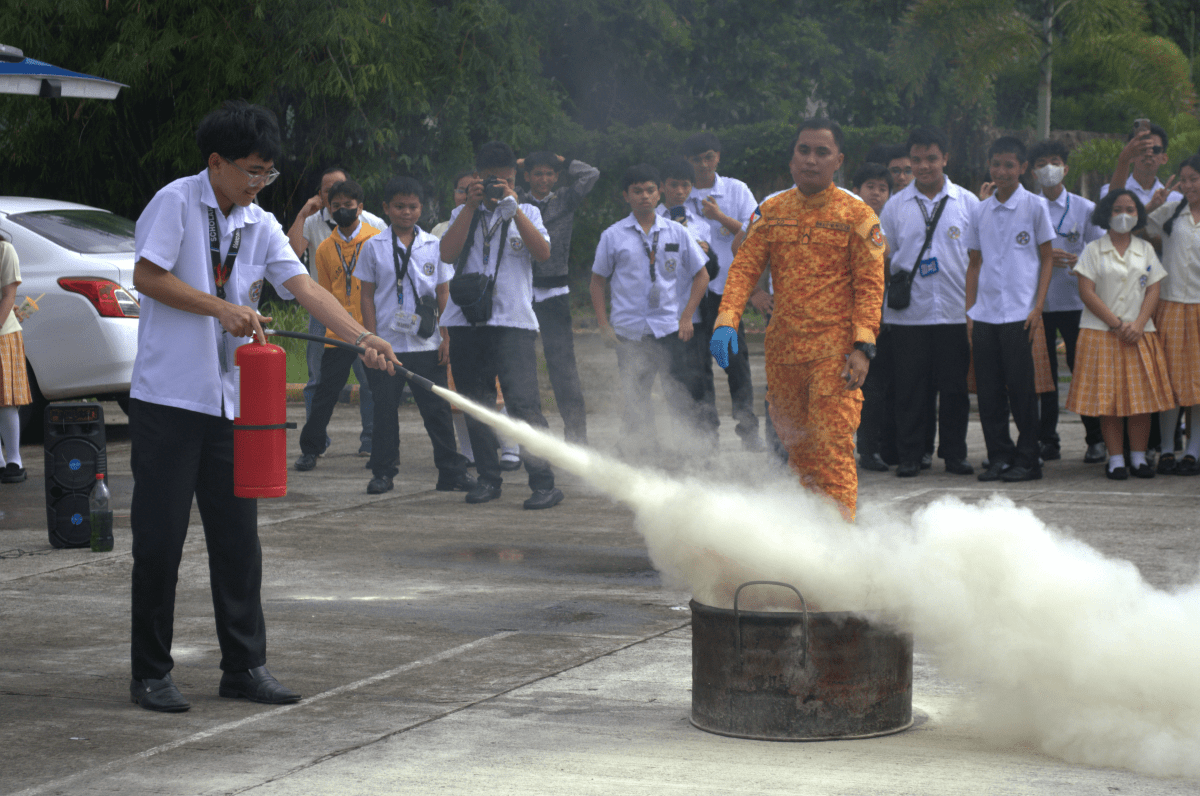
To reorient scholars about disaster preparedness, Philippine Science High School – Eastern Visayas Campus (PSHS-EVC) conducted an earthquake and fire drill orientation in collaboration with the Bureau of Fire Protection (BFP) Palo, November 20, 2023.

Fire Officer I Romeo Canayong and Fire Officer I Jovelyn Montes talked about fire prevention and earthquake safety respectively at the PSHS-EVC Gymnasium.

Canayong started off the orientation by discussing the importance of acquiring basic knowledge on the nature and behavior of fire, familiarizing the proper response and procedures, raising awareness on fire safety, as well as the anatomy of a fire extinguisher and how to use it. 

“Sa lecture na ‘to, habang nabubuhay kayo magagamit niyo ito, pag i-internalize niyo po yung nilelecture namin. [This is an important lecture that you should internalize for you can use this as long as you live.]” Canayong said.

Following the talk on fire prevention, Ondez spoke about earthquake response as they enumerated what people should know before, during, and after an earthquake. 

“Narealize ko na it is really important na maglecture ha students, namati talaga kamo, naaware kamo. [I realized that it is really important to conduct lectures to students. They listened, hence became aware.]” Ondez said.

Next, live demonstrations of fire prevention were done by Fire Officer 1 Leigh Co and Fire Officer 3 Cyrus Maroto, showing the use of fire extinguishers and the blanketing method. 

Co said it is important to demonstrate what they have discussed as it exposes the students to “healthy fear” as a way to showcase what they have learned from their discussion. 

To conclude the event, an evaluation was held at the PSHS-EVC Gymnasium with the PSHS-EVC faculty, Student Alliance officers, and Red Cross Youth officers. The BFP Palo officers were also awarded their certificates of recognition.

During the evaluation, Maroto mentioned that public awareness is one of the vital keys to the fire and earthquake procedures as it enables the person to be aware of their surroundings, as well as what they should do in times of these events. He also mentioned that, with the takeaways from the orientation, we would be capable of helping other people.

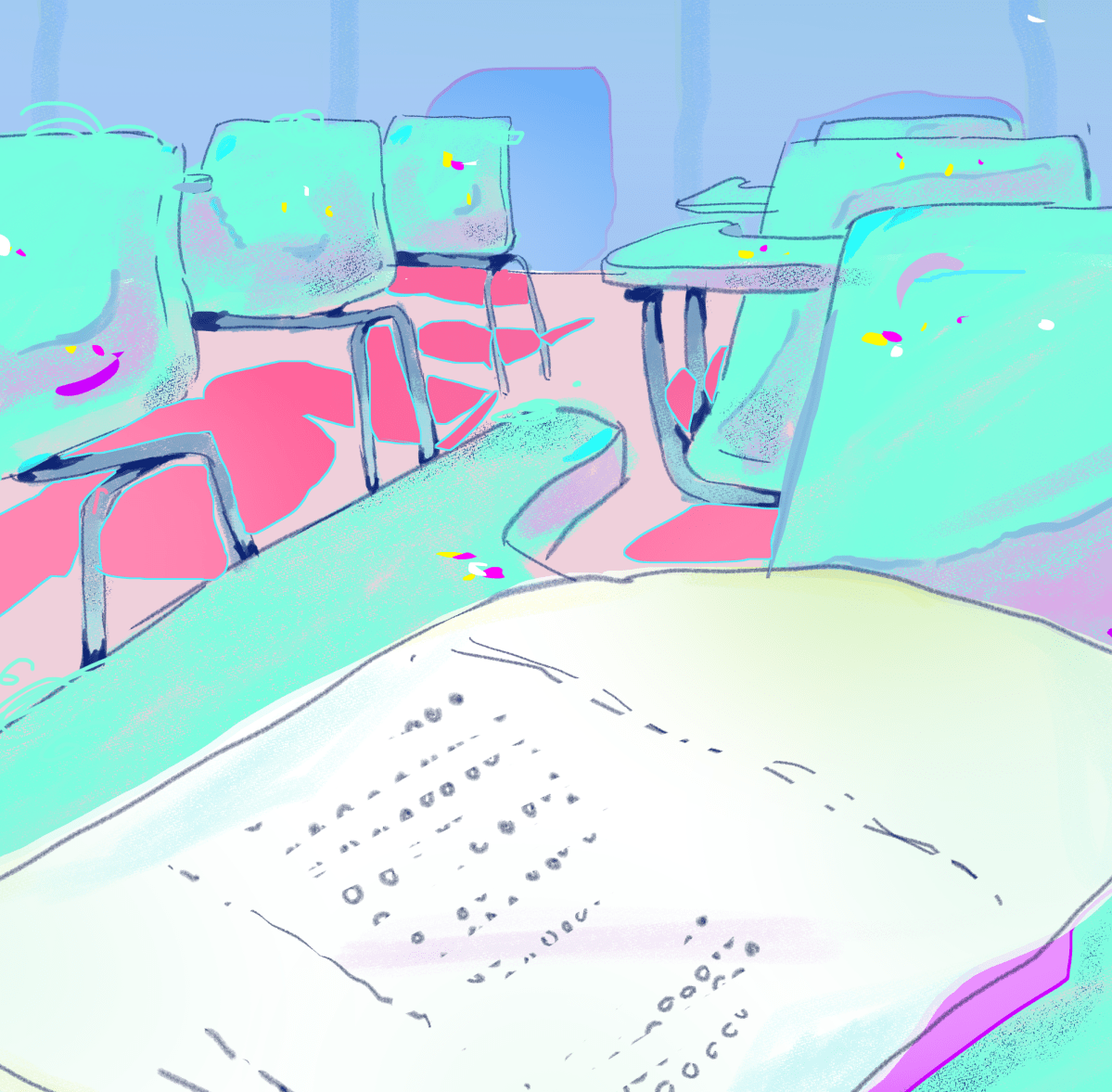
Conquer D-Day The Pisayer Way: 10 Tips to Ace Your NCE

by Ellyce Lim || Illustration by: Kyle Nase

THE NCE IS BACK! Right off the bat, let’s take a moment to appreciate the fact that you are applying to Philippine Science High School. Has this been your dream high school forever? Did you only apply because of your friends? Or are you perhaps taking it just to see if you could pass? No matter the case, I’m sure you’d want to ace this exam.

So to help you out, here are some tips and tricks from your future senior ates and kuyas that could make your NCE experience much less daunting.

Tips, Tricks, and To-do’s

  1. What’s in your bag?

Trust me when I say you’ll want to prepare your bag beforehand. The last thing you need is to get to the testing center to find you forgot to pack an eraser, calculator, or worse— your lucky pen. In all seriousness, it may seem like a small thing to do, but it can help a lot knowing that you’re ready and set to go.

  1. Food is life

One tip you’ll hear from almost every NCE taker is to bring snacks. Biscuits, chips, drinks, water, whatever you choose, ensure it is convenient and filling. Just like with learning, taking a test on an empty stomach is never a good idea. You’ll need all your focus to be on the paper, not your grumbling organ. I prefer smaller snacks and candies, but that can vary among people. Make sure to bring your favorites, but avoid messy food!

  1. Sleep like a baby

Proper rest is super important for when you take the NCE. Your brain won’t be at its best if you lack an adequate amount of sleep. 8 hours at least. Trust me, you don’t want to be falling asleep while taking (speaking from experience).

  1. Be comfortable

Preparing yourself for the test includes being as comfortable as possible. The test isn’t about looking good, so be sure to wear something decent but comfortable.

  1. Time waits for no one

Always be aware of the time. Usually, the proctors will update you on how much time you have, but sometimes, they can forget to do that. Just to be safe, bring a watch since you can’t use your phone during the test, and remember to check it occasionally.

  1. Don’t panic

It’s pretty obvious that you shouldn’t panic, but it’s worth reminding. If you feel like you don’t know the answer to a question, just move on to the next and go back to it later. If time is almost up and you have a lot of blanks left, guess! Try to finish the paper as much as possible, even if you have to resort to guessing. Statistically, you would still have a chance to get the right answer.

  1. Gut Feel is so Real

I cannot count how often I’ve heard people say, “I shouldn’t have changed my answer” or “I should have trusted my gut” after taking a test. It’s good to rely on logic most of the time, but sometimes you just need to step back and let your instincts take the reins.

  1. Imagination

This tip is for the abstract reasoning portion. Your imagination is a valuable asset! When you get questions that require viewing other perspectives, you can try to picture the object in front of you. Imagine that it is tangible. Spin it, twist it, and move it around so you can see what it would look like. I know you might look like a weirdo in the process, but trust me, it works.

  1. Question Clues

Sometimes the questions in the test reference each other. You might be able to find the answers by simply reading other questions, so take note of the repetitions and reoccurring themes while you go through the test.

  1. Stop Reviewing

I know this sounds ridiculous, but this is 100% serious. Stop reviewing the night before and the day of the test. You’ve done what you can and one day of extra reviewing cannot change that much. You need your mind to be as fresh and energized as possible. So, take the night off to prepare your things and just go to sleep, okay? You need and deserve the rest.

To sum it all up, Prepare early, be comfortable and calm, and be sure to be in your best condition before the test. Stop reviewing the night before and instead, use the time to prepare your things and get enough rest. During the test, trust your instincts, use your imagination, and be on the lookout for question clues. Finally, remember that you deserve this. Taking the test is already a huge achievement on its own. You can do this, future Isko. 

Good luck, and see you in Pisay!

Is Artificial Intelligence Crossing the Line?

By: Clarence Jude B. Tabinas || Photo from: GMA News

From light bulbs and mobile phones to Artificial Intelligence (AI), technological advancements have made our world an easier place to live in.  Although such innovations have already proven their use to man, we must bear in mind that boundaries should be established regarding how far technological advancements should go.  

During the opening of the National Collegiate Athletic Association (NCAA) Season 99, GMA Integrated News introduced their newest AI sportscasters, Maia and Marco. These newest sportscasters will report the happenings of said event, as well as local and international sports events featuring Filipino athletes. 

This move by GMA shows their dedication and commitment to innovation in journalism. By being the first in the country to utilize artificial intelligence for news delivery, the network has opened new doors which seemed impossible before. This will also lessen the workload of sports journalists as the AI sportscasters can swiftly deliver game statistics. However, will this innovation really improve journalism in the country, or will it only reduce its effectiveness and credibility?

Although Oliver Victor B. Amoroso, GMA Network’s Senior Vice President and Head of Integrated News, Regional TV, and Synergy, has already clarified that the two AI sportscasters are merely to complement and not replace journalists, will this remain true in the future? 

It is undeniable that technology plays a crucial role in journalism. However, AI sportscasters, who run in a programmed manner, can never fill the roles of veteran journalists who have spent years polishing their craft.

For one, AI sportscasters are not capable of expressing feelings. Unlike humans, who exhibit a variety of emotions, they can only report in a monotonous way. They could never replicate the excitement in the faces and voices of journalists every time they report interesting news.

Moreover, as AI sportscasters are susceptible to tampering, they can generate fake news and manipulate facts.  This could undermine the integrity of newscasting, which has been shaped by the country’s journalists for generations.

Although currently they are merely there to complement journalists, the network’s move of using AI sportscasters could pave the way for job losses later on. As the world continues to advance, it is possible that in the near future, AI will completely dominate journalism, leaving no more room for human journalists in the industry.

With this, it can be said that technology is indispensable; however, it should never cross the line by doing something that only humans can do. Instead of relying on AI sportscasters, large media companies like GMA should focus on training young and passionate journalists. Not only will they be able to provide job opportunities for Filipinos, but they will also pave the way for the emergence of a new generation of journalists who will one day serve the people.

Breaking the Bonds

By: Allyssa Janice Capoquian || Illustration by: Kyla Campo

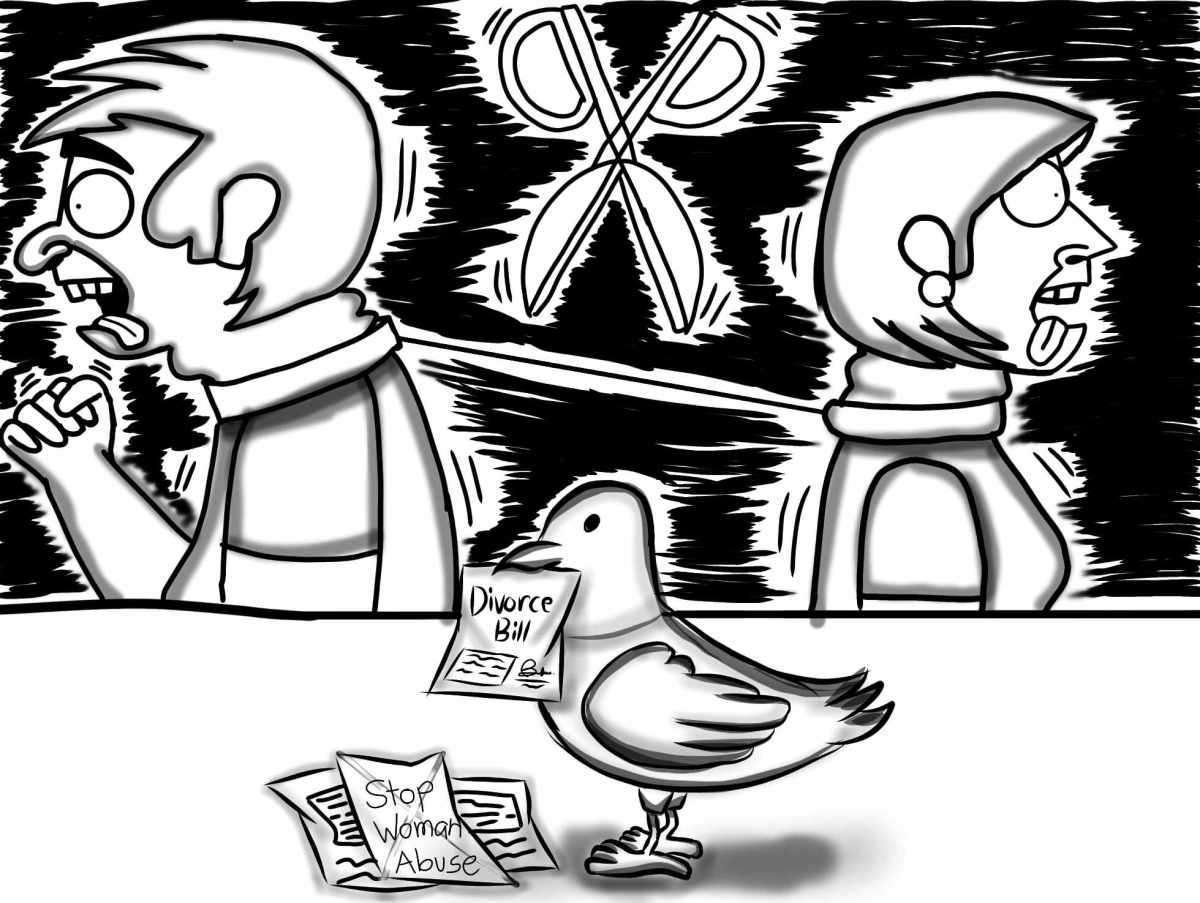
A notable shift in the Philippine legislative landscape occurred on September 19, 2023, when the Senate of the Philippines approved a bill providing a legal ground for absolute divorce. The approval of the bill did not mean it had already been passed into a law. However, its passing could usher in a major reformation to the conservative Filipino society. Sen. Risa Hontiveros, the one who passed the bill, stated that, “The passage of a divorce law is one of the ultimate forms of freedom we can give Filipino women.” In a nation of conservative and patriarchal tendencies, the bill aims to provide every person, especially women, with an equal footing- an ability to make a choice. 

The Philippines has long been known for its strict laws against divorce. The country emphasizes the sanctity of marriage, but fails to see the prevailing issues found in that union. Domestic violence remains a pervasive issue in our country. According to the Philippine Commission on Women, one in four Filipino women age 15-49 has experienced physical, emotional, or sexual violence by their husband or partner. However, many women subjected to abuse do not report their experiences. The culture of victim-blaming has led to silence amongst abuse victims. This can be connected back to the strong societal and religious norms in the country, and their desperate need to uphold the patriarchal family image. 

Moreover, the country is unsuccessful in providing a strong justice system for these victims. They end up staying in these toxic marriages because they are not provided the support or opportunity to escape from those harmful situations. Even though annulment is a possibility, it is far too long a process and far too expensive for the working-class to afford. The tedious and unaffordable process of annulment ironically exhibits the Philippines’ perpetuating stand against divorce.

Additionally, women stay in abusive marriages for their children. But abusive or unhappy marriages also affect the development of children who are exposed to those stressful conditions. Children constantly being exposed to an aggressive environment are more likely to develop aggressive tendencies, or perceive that aggression as normal. It may dissuade them from marriage altogether. According to The Child and Youth Welfare Code, children are entitled to rights providing them with familial security and protection from harm. These rights can be neglected in abusive or dysfunctional households. Divorce, in many of these situations, could have been a gateway to stop these problems before they could worsen. 

It is expected that coming from a predominantly Catholic country, many Filipinos oppose the bill. However, it is essential to emphasize that the passing of this bill was not made to undermine Catholic beliefs, but simply meant to provide the option for people to divorce and remarry. In our democratic country, everyone should be given a choice. Everyone should have their rights upheld. The Senate’s approval of the divorce bill is not meant to disrespect anyone’s religious beliefs. Rather, it is another path bringing progression, freedom, and inclusivity into this nation.

When Home is too Far From Reach

by: Lianna Lopez || Illustration Credit: Ashkinaz Canonoy

Stack-by-stack, elementary school textbooks piled themselves on top of one another on the round table of the family dining room. Along with them was a collection of old and crumpled academic worksheets and eraser debris scattered all over. In the midst of it was a girl in thick-rimmed glasses absorbed in the confines of academic work. But this isn’t about her. It’s about the boy who slept just a room away from where she sat. It’s about his story and a visitor whose presence did wonders. A visitor whom we’ve all met at least once in our lives. 

Unlike that overachieving little girl drowned in the sea of academic life, this lad was stuck still and lost sitting on a boat in the midst of turbulent blue ocean waves. His tiny boat fits just him— no room for stacks of textbooks, used worksheets, thoughts of anything of the sort. It was a place devoid of any living human but himself. A place where he was alone, and his notions could go uncharted–where home was nowhere near. He was lost. Afraid? Maybe. However, on that Sunday noon, he was in a deep lonely slumber.

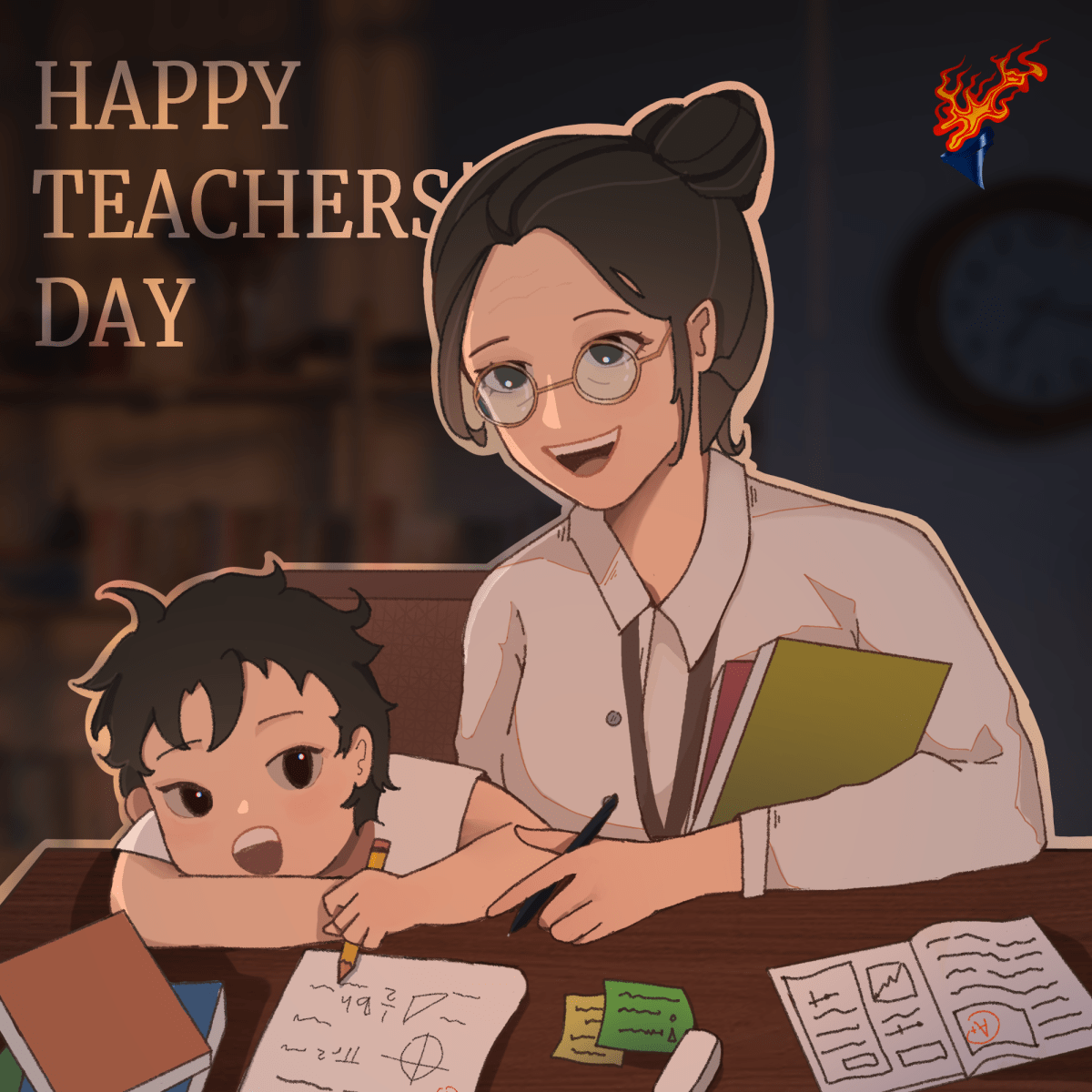
“Maupay nga udto,” the woman with a neat high bun greeted as she entered the house. The kid sat by the table looked at her curiously, slightly intimidated by the presence of a stranger in her home. She observed the visitor as she stood there with a warm smile on her face, one so warm and bright the gloomy weather did not feel as gloomy as it should have been. Shortly after, she fell into a conversation with the mother whose hands were damp and clammy as she led the woman who had introduced herself as the boy’s teacher and homeroom adviser to the room wherein the boy had himself barred in. She let herself inside.

She let herself sail across the dark, barren, and solitary waters the boy had remained afloat in for the past several days. He had spent the minutes and hours of the clock and the days of the calendar locked in this cataclysmic abyss, losing touch with the other world–refusing the hand of those who had tried reaching in. Yet, this woman, whose black and white-streaked hair, perseveringly and unrelentingly took in the extra time, work, and effort willingly on a Sunday noon to reach in for this helpless student. She could’ve used the day to spend time with her own family, but she was here. This spoke volumes.

He was a failing student. Left too much astray in the dark. Yet, this teacher had lost no hope in him. She had welcomed him, and had urged him back. And that says even more. 

She was his teacher: a second parent, a second mother. She was someone who had cared and understood enough to unwaveringly reach out to a student whose times had been difficult. Someone who would not so easily let her own student stray away and give up on quality education, on a future that awaits him. She is who a teacher is. She is who teachers are. 

They are not just educators in the classroom but also guardians willing to guide their students outside of it —whether these be about complex trigonometry and stoichiometry problems, or the heart-wrenching argument from last night’s dinner. They are the adults these children can turn to for advice, knowledge, and values essential to their growth as human beings. They are the grownups outside of their homes who can help mold a brighter future for these young individuals. 

As students, we have encountered these teachers. They, who’ve helped us as we’ve, at least once, strayed far too deep beyond the dark waters of this world. When we’ve found ourselves furthest in thunderous storms and desolate seas, they are the lighthouses that guide us in whipping through the challenges and sailing our way back to the right path in dreary times. 

When home is too far from reach, we see our beacons of light: we see our teachers— our life counselors, our academic instructors, our second parents, and everything more. 


Editor’s Note:

We at the Science Net are more than grateful for our teachers who make EVC home. To our second parents, greatest confidants, and unsung heroes, your dedication and love are truly worthy of all recognition.

Thank you for imparting to us your superpowers, so that one day, we, too, could become the heroes in our own stories.

Happy Teacher’s Day!