How to Be a Prestigious School

Tiffany Glenne Afable || Illustration by Nathalia Canlas ||

Trigger warning: This article contains statements regarding sexual harassment and predatory behavior.

Sexual harassment must be condemned in all spaces, but most especially in establishments that are meant to be safe for young learners.

Unfortunately, this is becoming a common occurrence within said establishments. Incidents wherein the perpetrator is a close batchmate or a known upperclassman, or sometimes, even a trusted figure in the faculty have occurred with alarming frequency.

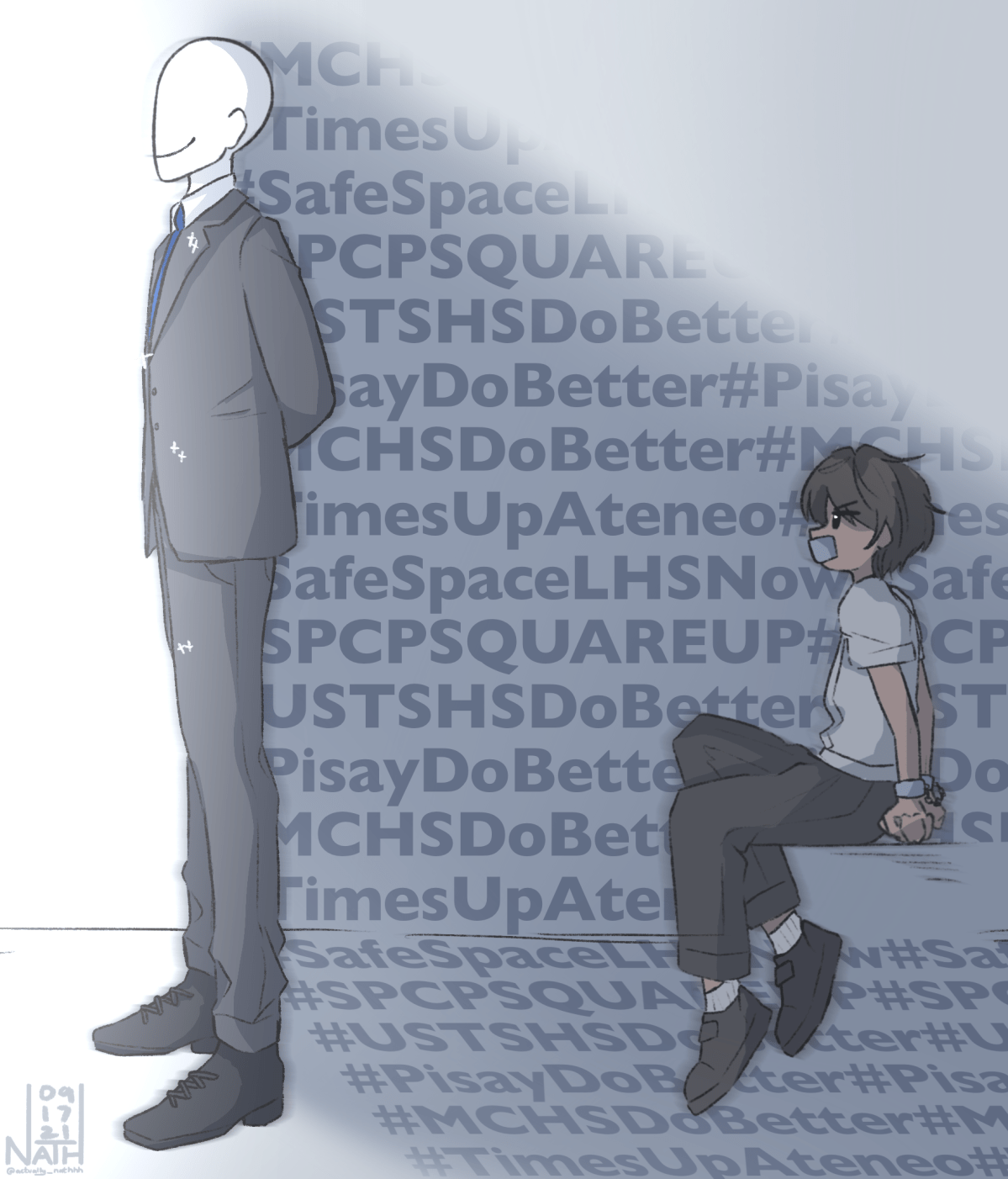
In the past two years, several schools have faced criticism and calls for safer learning environments. With hashtags like #MCHSDoBetter, #SPCPSQUAREUP, #USTSHSDoBetter, and #TimesUpAteneo, victims have come forward about their experiences, and student bodies have amplified their voices in order to create clamor and bring attention to these cases. 

In 2020, eleven victims— students of the Bulacan State University— shared their experiences of being sexually harassed by a teacher, which mostly occurred in their school’s computer laboratory. This sparked a movement among the student body, led by the #SafeSpacesLHSNow. More recently, a similar movement has risen among the Pisay community with the hashtag #PisayDoBetter after a number of students came forward with their stories that uncovered years worth of sexual harassment done by a well-known teacher in their campus. 

However, investigations on these cases don’t seem to be given the urgency they need.

Some educational institutions only write statements as a form of response to sexual harassment cases, such as in the case of the movement #TimesUpAteneo, which had risen within the Ateneo de Manila University’s student community. Many were disappointed with this response. Replies such as Saddened lang? No mention that they should not tolerate it at all?” and “Last year pa ‘to ah. Hindi pa pala resolved ‘to?were posted under the tweet. It is evident from these comments that it seems to take a long time before schools start to take action—poor action—on sexual harassment cases, as if the violation of their students’ security doesn’t  hold much gravity to them.

This kind of treatment has led victims to keep their trauma to themselves. Rather than perpetrators being afraid of the consequences of their actions, the way those in authority respond to such cases create an environment where it is instead the victims who fear the repercussions of coming forward. This place that students consider as their safeguard no longer feels secure.

With the countless times that different student bodies have clamored for justice, with the countless times hashtags like #ProtectYourStudents and #DoBetter have trended on social media, a disturbing pattern begins to emerge: some stories that had occurred years before had been kept in the dark because of how the perpetrator was a personality loved by many.

This then begs the questions: How many more of these stories are in the dark? How many more incidents are in the closets of these prestigious schools, rotting along with the other skeletons they have hidden? How many more victims have to be forced to keep silent? How many more cries have to be left unheard?

Students don’t want strict dress codes. They don’t want statements of sympathy. They want systematic change, which includes justice for the victims and accountability for the perpetrators. And so, this outrageous cycle of drawing a veil over the sexual harassment happening in schools has to stop, because for as long as this goes on, predators will continue to walk down school hallways; this nature that allows predators to run free and students to drown in their trauma must be eradicated.

To the teachers, you are considered as the second parents of these young learners. It is your duty to educate your students properly and to become a figure they can look up to. You must never use your authority as a pass to sexualize and take advantage of them, may it be a joke or not.

To the school administrators, every student has the right to feel secure in their learning environment, and it is your obligation to make sure nothing interferes with that. Your blatant ignorance of the sexual harassment and assault that happens within school hallways is what enables this culture to keep going, and it will continue to prey on your students until you finally decide to step in and act upon it. A reputation—no matter how glorious—is hollow when it stands in a graveyard of the stories you have sent to die without justice.

To the victims, whether you have come forward or are still finding the strength to tell your story, you are immensely courageous. This is your fight, and we will always stand by you. We will continue to push forward until a safe learning environment is made and fuel our voices until this cycle is lit ablaze.

Someday, we will finally see this culture in ashes.

S.Y. 2020-2021: Yesteryear in Review

Tiffany Glenne Afable || Photo by Shawn Elizarde ||

Nothing felt more delightful than learning that the remaining school days of March 2020 had been suspended. The tasks of the day pushed to be the burden of tomorrow, the exhausting schedule of classes, cleared. 

But the rejoicing students could never have expected that their joyful vacation would suddenly turn into a tough school year of online classes. 

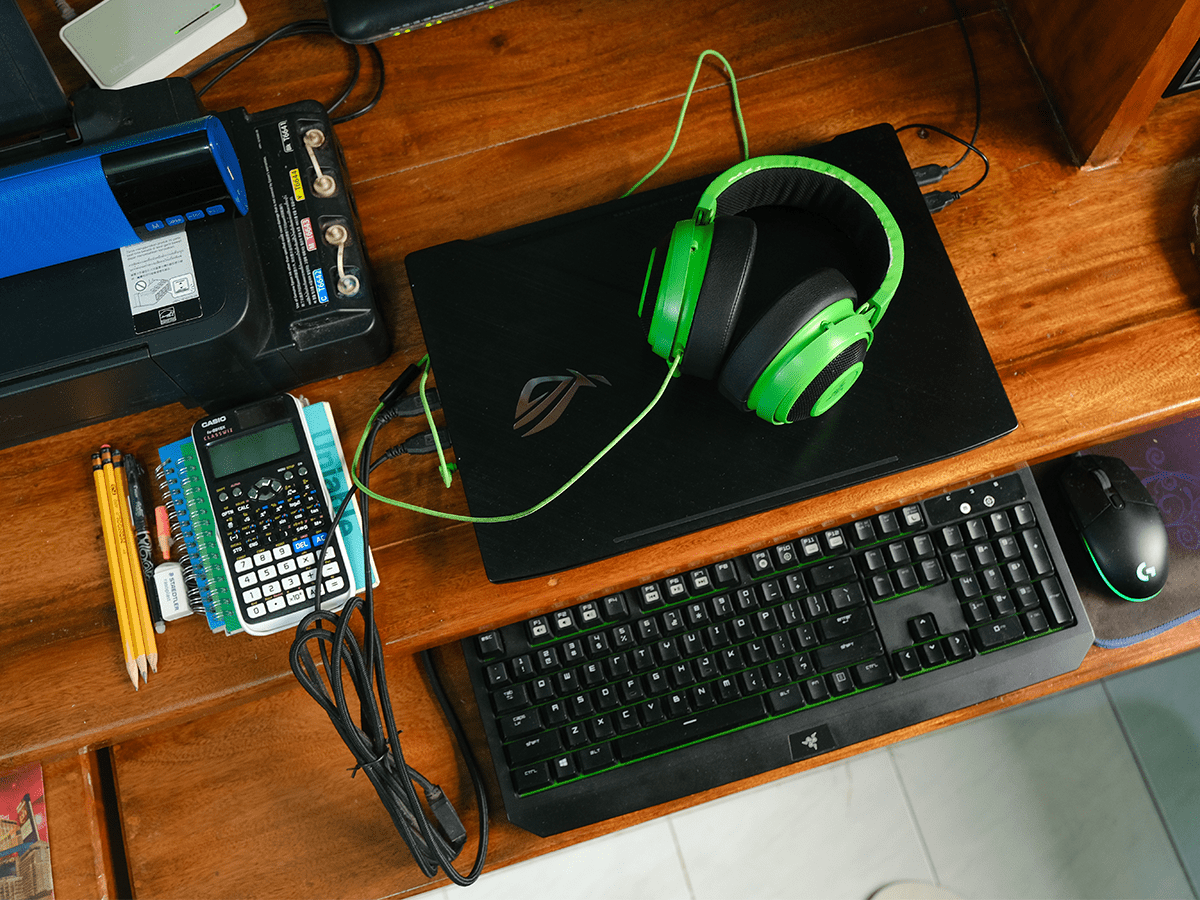
For the School Year 2020-2021, schools, including the PSHS System’s 16 campuses, shifted into the unfamiliar space of online learning. Physical books were replaced by laptops, face-to-face interactions by virtual meetings. 

Part of embracing this “new normal” was having to let go of yearly awaited EVC traditions. Forced to hold it online, this pandemic has robbed Batch 2023 of the chance to host a full-scale Sportsfest event. This setup has also taken away many of the freshmen’s first and seniors’ last experiences, as they bade their hellos and goodbyes over the internet. 

However, the hurdles of the school year went far beyond missing the annually anticipated occasions. 

The COVID-19 pandemic has forced educational institutions to deem traditional learning methods as unsuitable in this new setup. It has been a fast— extremely fast —unforeseen transition that has widened educational inequalities. In this so-called “new normal,” learners are required to have a computer and stable internet, a luxury not available to all. Though technology is a useful element in the academic field, access to it is a greater issue. Pivoting from the bustling environment of face-to-face classes to the declining attendance of students in online synchronous meetings, it is evident that the academic year has left many students behind. 

The school year had also proven to be mentally taxing. Neither the unfamiliar routine of online synchronous classes nor the seemingly endless stream of deadlines were helpful in easing the growing anxiety within the students. This unforgiving cycle had everyone in dire straits. Most left meetings with barely any takeaway knowledge, as they pushed through the year no longer for the sake of learning, but for the fear of being left behind. 

Just as it has been considered a new light for education, this academic system has also cast a shadow upon the people for whom its vision steers. There are gaps to close before this setup can be regarded as optimal for everyone. One can only pray that the upcoming school year will be no bigger whirlpool than the last.

Hopefully, we’ll all see each other again in face-to-face classes, and no longer through the sad distance over the screen. Until then, be proud of yourself for reaching this far, in whatever way and shape.

When Conditions Change to Times

Jake Tse Jr. || Cartoon by: Ma. Kristine Erika Flanco

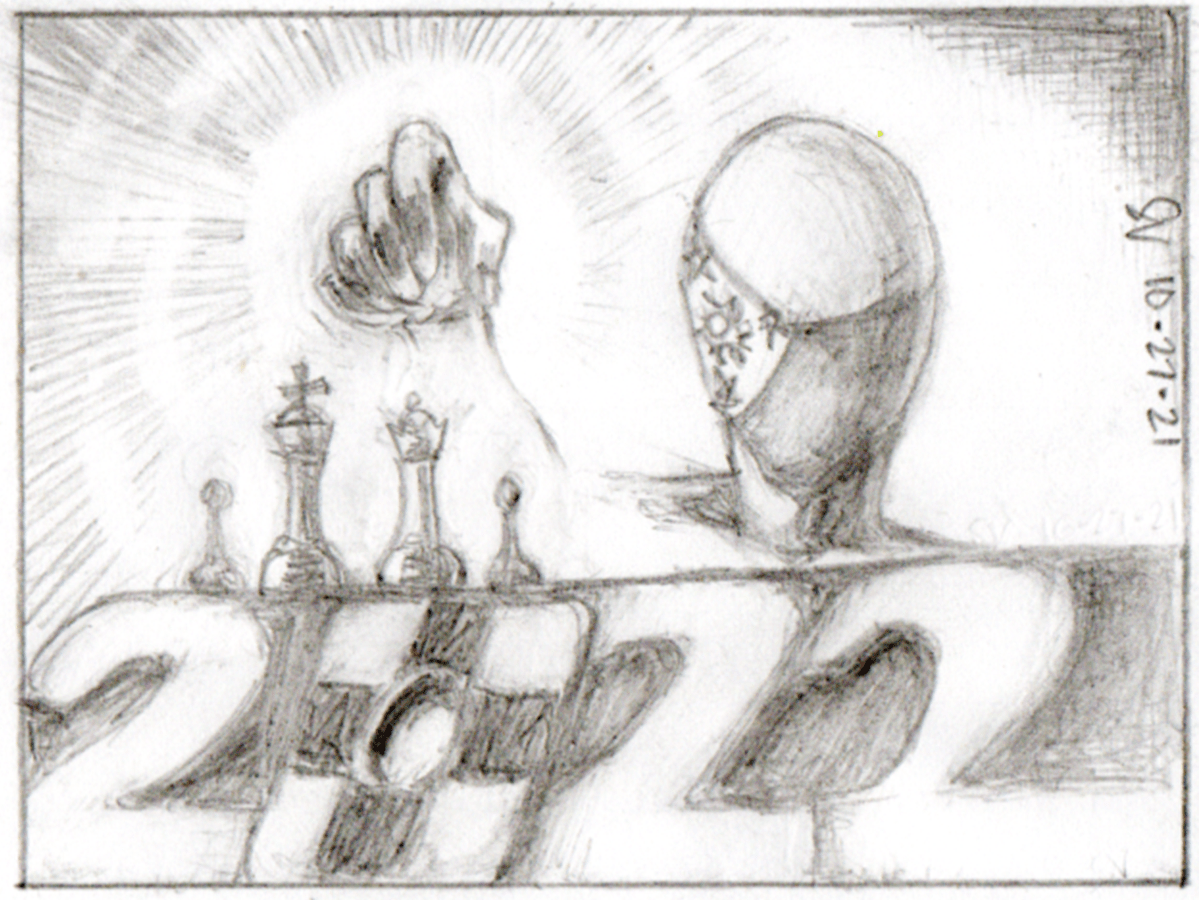
In keeping with the safety measures against the coronavirus pandemic, the 16 campuses of the Philippine Science High School System announced its plan of action for continuing with its mission of providing education humanistic in spirit, global in perspective, and patriotic in orientation. Little could it have been anticipated however, just how pushed Pisay scholars would become to go beyond the limits of their physical and mental capacities in order to cope. 

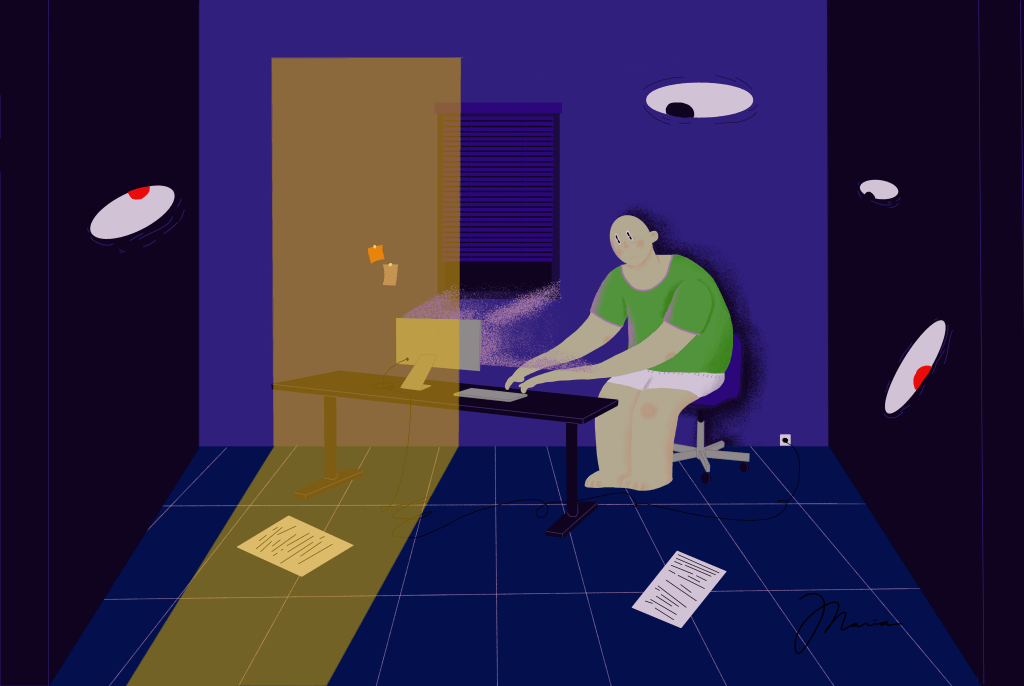
In this “new normal,” the modality of learning relies mainly on distance education through digital modules, frequent online synchronous classes, and online assessments. In practice, however, this equated to an overbearing academic workload accompanied by suboptimal home environments leading many students to struggle with keeping up to the high expectations set by being a Pisay scholar. 

Add to that the difficulties of relying heavily on the infamously terrible Philippine internet, and the difficulties of having counsel to support mental health due to quarantine restrictions. Not to mention the difficulties teachers face in having to educate with the entirely new virtual environment. All these led to an education set-up making students feel even more isolated and anxious, hindering their productivity and creativity. 

It then came as no surprise when Pisay scholars and alumni from all over the country raised an uproar on the internet, pleading for an academic break. Through the hashtag #PisayGiveUsABreak, the students’ concerns were expressed on social media. After more than 10,000 uses of the hashtag landing it squarely on Twitter’s trending page, these pleads were answered and an academic break for one week was amended to the school calendar. 

The academic break was then a crucial checkpoint for students to de-stress themselves and reconnect with reality. Students, as well as teachers, were given time for themselves to enjoy, relax, and rest in order to prepare themselves mentally and physically for upcoming school requirements. However, come the return of classes, the exhausting cycle repeated itself and the supposedly rejuvenated spirits of the Pisay community were quashed back down to a depressing square one.

As rigid as the academic calendar and curriculum is, it is then necessary for the education system to be less demanding and more considerate to reduce pressure and anxiety from students. Likewise, parents should not expect too much from their children and support them when needed. It is worth noting that aside from benefiting students, this aids teachers as well since making modules and assessments will significantly be less taxing.

Lastly, it is essential for regular counseling sessions to occur between students and teachers. Alternatively, online school community events and games can be implemented to lighten everyone’s spirits. In addition to that, everyone should be made aware of mental health problems to create a better understanding of one another. 

All things considered, education under the new normal is surely challenging and difficult to adapt to. It can be a cause for mental health problems among students, but with a change in the system and cooperation, we can make online learning healthier and more effective. For online education to be truly effective, we must remember this: Education is a marathon, not a sprint. When conditions change to times, it is critical for the runners and moderators alike to pause and rest in order to cross the finish line in good shape. 


Editor’s Note:

For scholars and members of the PSHS-EVC community seeking support, the Guidance and Counseling Unit of the Student Services Division is offering its services through virtual consultations in either individual or group meetings which can be requested via this form:

https://forms.gle/UsAHNMCcZGGWjEbr8. They are also available for private messages and e-mails care of Sir Rogene Ramos ( facebook.com/maroongeers or raramos@evc.pshs.edu.ph ).

Right for the Privileged, Luxury for the Oppressed

MARK RUSSELL CARANZO ||

In fear of contracting COVID-19, soon-to-be mother of three Katherine Bulatao chose to give birth in their home in Caloocan. However, she suffered intensive blood loss which demanded immediate medical intervention. After being refused admission by six hospitals amid profuse bleeding, 26-year-old Katherine passed away—five hours after giving birth.

This incident does not only speak of an unfortunate circumstance solely distinct to Katherine. Instead, her death reflects a bigger issue pertaining to a problematic healthcare system and a demarcating line separating our society into the privileged and the oppressed.

Katherine’s husband received disparate reasons from the hospitals they had sought. These included the lack of resources and demand for initial deposit. Hence, it would be substantial to address each one.

Firstly, Republic Act No. 8344 states that in cases of emergency wherein there is inadequacy in necessary facilities and/or supplies, it is the responsibility of the hospital to direct patients to nearby health institutions capable of providing the medical care these patients require. However, the transfer could only be done once the receiving hospital has agreed and emergency support has been administered. However, taking the husband’s claims as accurate, the aforementioned procedures were apparently unfulfilled. Instead, the hospital where the patient was referred also refused admission citing the shortage of available rooms. Furthermore, the husband claims that the hospitals did not bother to check his wife’s vital signs.

Secondly, the patient’s right to appropriate medical care and humane treatment, as specified by the Department of Health (DOH), was indiscriminately violated after a hospital allegedly asked for a thirty thousand-peso deposit. The DOH has long inculcated that discrimination deserves no place in public healthcare especially with regard to a patient’s financial capabilities. The act was also in grave contrary to the Anti-Hospital Deposit Law, which took effect in 2018. 

Katherine’s case has indubitably unveiled prevailing issues in the Philippine healthcare system that are in dire need of attention.

For one, the country lacks health facilities, medical supplies, and healthcare providers. For instance, the World Health Organization (WHO) recommends 20 beds per 10,000 people. Nonetheless, the Philippine Statistics Authority (PSA) reported that the hospital beds in the country only stagger at 9.9. On the other hand, the WHO recommends 1:1000 doctor to population ratio but the Philippines falls short at 1: 33,000. In terms of community healthcare service, only 47% of barangays have operational health centers. This undeniable deficit has become highly conspicuous when the system was overwhelmed with the pandemic. The availability of ventilators has dictated the maximum capacity of hospitals to save lives.

In the midst of this lack, one thing is certain: justice needs to be served.

Therefore, the government needs to examine the case closely in order to identify blatant violations. If proven guilty, the hospitals should be held liable to ensure that future similar incidents would be prevented. Otherwise, the enforcement of pertinent laws would be rendered ineffective.

In addition, the case is a negative externality of the government’s low prioritization of health sectors as evident in the national budget. The over-all share of the sector has plummeted from 4.9 to 4.5 percent. This has cut the budget of essential projects such as the Health Systems Strengthening Project by 6 billion pesos. Hence, the government must increase the budget of health sectors for the betterment of healthcare services in the country.

It is indeed disheartening to witness unnecessary deaths in a time when saving lives is critical. Undeniably, Katherine is just one of the many Filipinos who are victims of a poor system. Thus, mandated by the Constitution to uphold public interest at all cost, the government must work hand-in-hand with Philippine hospitals to ensure that healthcare is no longer just a right for the privileged nor a luxury for the oppressed.

Baby River: Injustice, personified

Mark Russell Caranzo ||

Incarcerated behind the bars of indifference and selective justice, human rights worker Reina Mae Nasino, mourned in jail over the death of her three-month-old baby, River, amid constant pleas for release. Oblivious of her pregnancy during the onset of detention for supposed illegal possession of firearms and explosives, Nasino gave birth and nursed baby River in the Manila City Jail before she was separated from her child a month after. River’s health deteriorated fast after the separation. Despite Nasino’s appeals to allow her to take care of her terminally ill child, the court remained apathetic to the mother’s request. 

River’s death speaks volumes of how the Philippine justice system has failed to serve public interest once more. In the first place, the court did not consider the urgency of the situation when the National Union for People’s Lawyers (NUPL) requested to grant Nasino the opportunity to stay with her baby for at least a year, more so when the baby was reportedly sick. In fact, the court junked such petition citing inadequate resources to ensure she remains detained while nursing her baby. However, with the country in the pandemic’s stranglehold forcing lockdown for all its citizens, a case for Nasino’s “escape” from authorities is flimsy at best. 

Moreover, Nasino’s case was an apparent juxtaposition of court decisions that were previously ruled out to VIPs and other influential persons. For instance, if the Sandiganbayan granted Sen. Bong Revilla a five-hour furlough to visit his sick father last 2015, then why can a lower court not do the same? As stated in the Human and People’s Rights Declaration of the Philippines, every person must be treated equally before the law. Therefore, it is undeniable that the concerns regarding selective justice that netizens have voiced out are all well founded.

In order to prevent another case such as this from happening again, what then needs to be done?

First, the amount of time allowed for children in custody to be with their mother (which is currently one month in the Philippines) should be extended. For reference, other countries such as Malaysia allow detained mothers to be with their children for up to four years. Looking at the Philippine context, such one-month rule poses a problem as according to psychoanalyst and parenting expert Erica Komisar, mothering is very crucial to the first three months of a child. She added that intense closeness and skin-to-skin relationship remain critical for up to three years, things which both River and her mother were sadly deprived of.

In line with this, the government must also invest in bettering jail facilities for inmates with specialized needs such as pregnant women. For instance, based on a report by the American College of Obstetricians and Gynecologists, incarcerated pregnant women must not be compromised nutritionally, and must instead be given full access to prenatal care through regular obstetric visits, among others. At the same time, the Birth Companion charity has emphasized that postnatal facilities are also of tantamount importance. The group argued that well-ventilated breastfeeding sections, antenatal clinics, and regular family visits must be seen as prerequisites. It is therefore obligatory for prison systems to give highly vulnerable Persons Deprived of Liberty (PDL) the appropriate treatment that they deserve.

In conclusion, it is undeniable that deliberate indifference and selective justice played a significant role in the death of baby River. As Atty. Edre Olalia of the NUPL said, “What kind of justice system, nay, society, do we have to let this inhumanity and injustice to mother and child happen?” Unfortunately, more of these accounts are bound to happen, unless the Philippine justice system becomes an equal playing field. Indeed, baby River was a victim of a problematic system, yet every Filipino must be aware that this system would continuously exist and persist, unless otherwise challenged and rectified.